360 hr
Swiss Travel Pass: Unlimited Rail, Bus & Boat Access
- Multi-attraction access
- Mobile voucher
- Flexible dates
- Free cancellation
Swiss Train Travel — Panoramic Routes & Alpine Passes
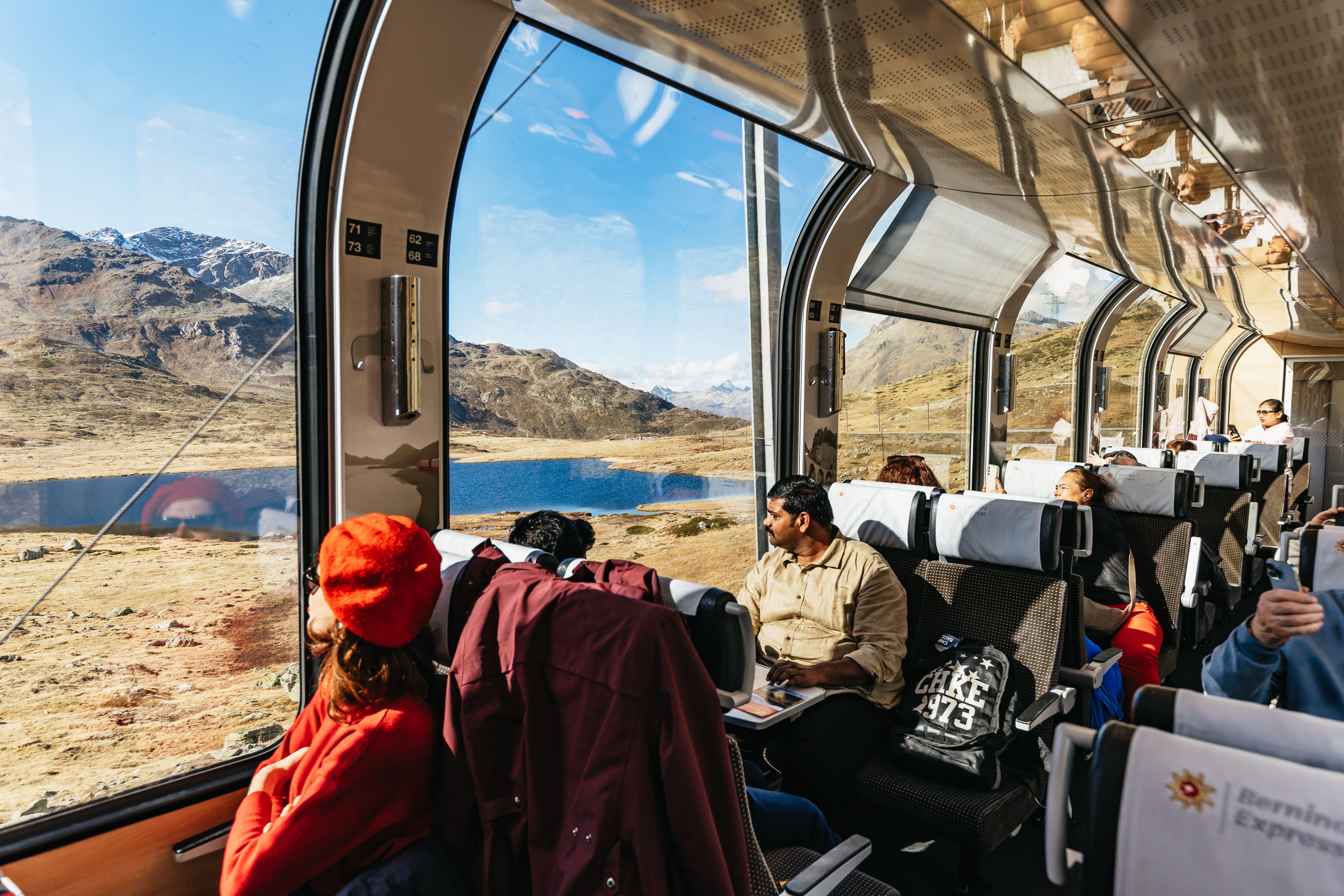
Traverse glaciers and vineyards on Europe's most punctual network, where every carriage frames the Alps
Compare fares, pick the fit — all bookings are mobile-voucher and eligible for free cancellation where shown.
360 hr
11 hr
Navigating the Swiss Travel System requires choosing between options that optimize your swiss train travel experience based on frequency of movement. Understanding these rail passes helps visitors navigate mountain railways and scenic routes effectively.
|
Top pick Swiss Travel Pass All-inclusive rail network access |
Half Fare Card 50% discount on journeys | |
|---|---|---|
| Pass Type | Unlimited travel pass | Discount entitlement card |
| Best For | First-time visitors with heavy itineraries | Budget-conscious travelers taking fewer trips |
| Validity Duration | 3 to 15 consecutive days | Valid for 1 month |
| Discount Structure | Free travel on most routes | 50% off all standard tickets |
| Route Coverage | Trains, buses, boats, and panoramic lines | Trains, buses, boats, and panoramic lines |
| See tickets & prices |
Verdict: For seamless swiss train travel tours, choose the Travel Pass, or opt for the Half Fare Card if your swiss train travel tickets are limited to infrequent long-distance connections.
Hand-picked experiences loved by thousands of travelers
12 hours 30 minutes
Free Cancellation
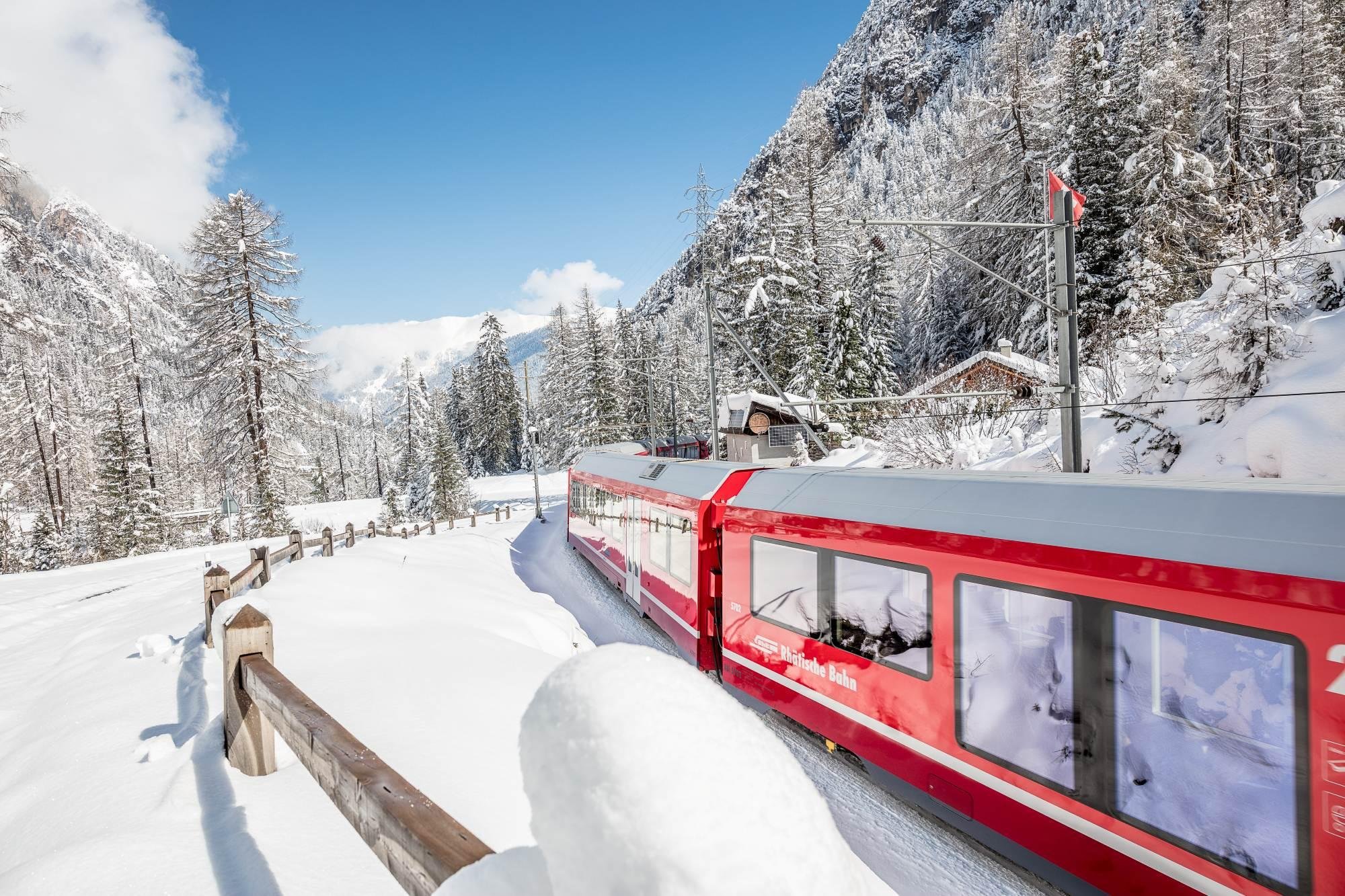
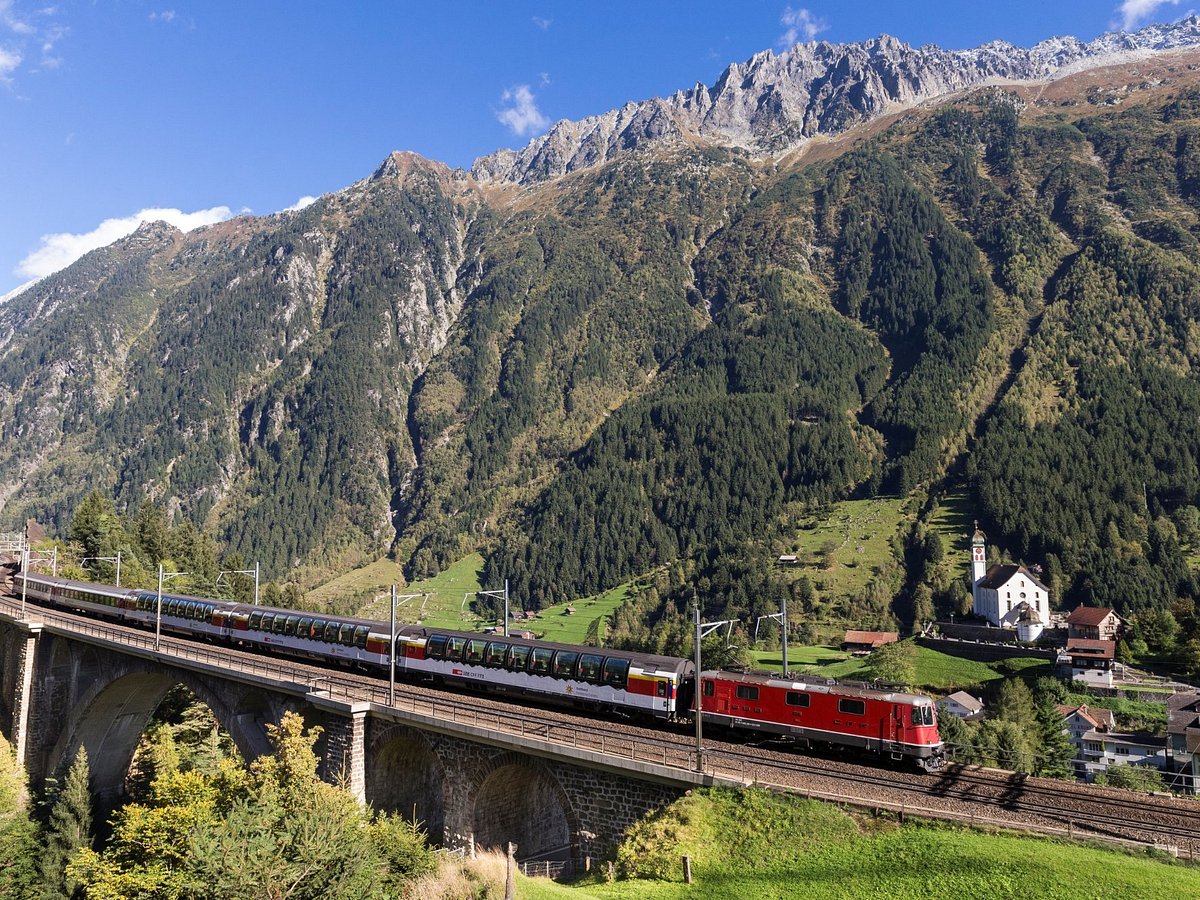
Ride the legendary Alpine railway through 55 tunnels and 196 bridges, from glacier peaks to palm-lined valleys
12 hours 30 minutes
Free Cancellation
Ride the legendary red train through UNESCO mountain scenery and explore Switzerland's elite resort town
5.5 hours
Free Cancellation
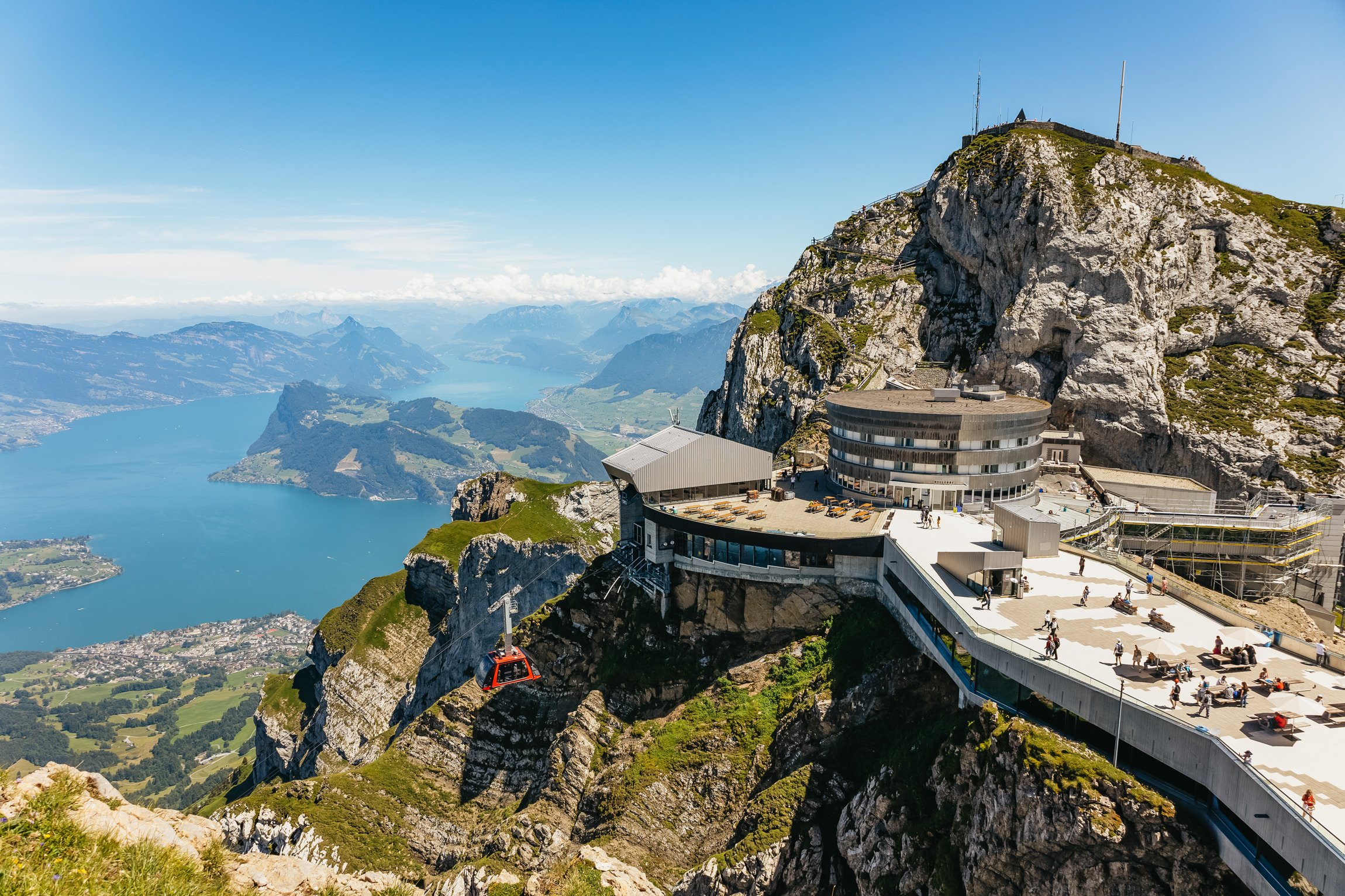
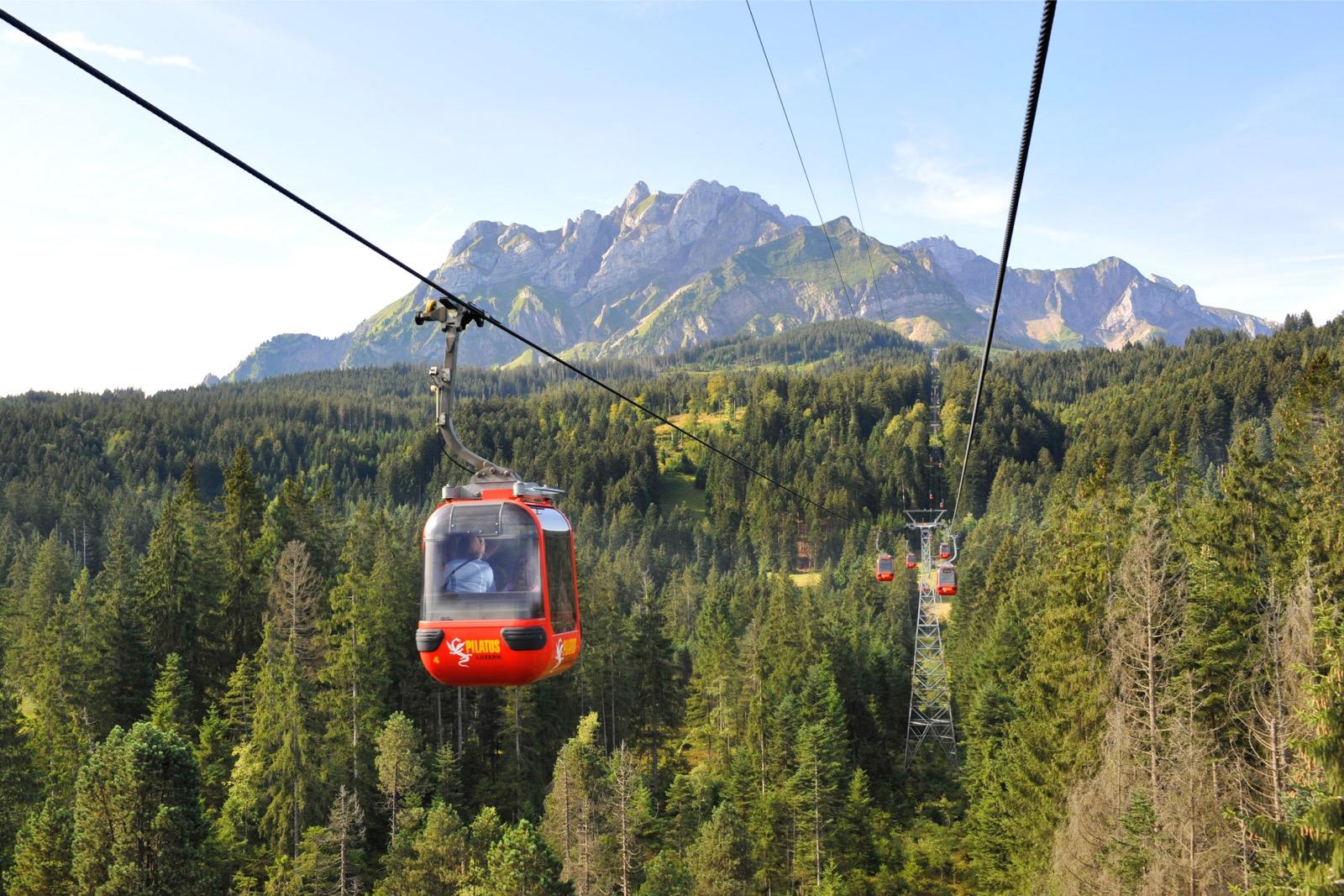
Soar to alpine heights by cable car, descend on the world's steepest cog railway, and cruise across Lake Lucerne.
Full day experience
Free Cancellation
Ascend Switzerland's Dragon Mountain via gondola and the world's steepest cogwheel railway for alpine views
Valid for 1 month
Free Cancellation
Unlock 50% savings on Switzerland's trains, buses, boats, and mountain transport for an entire month
11 hours
Free Cancellation
Journey to Europe's highest train station with private transport, ice palace visits, and alpine views
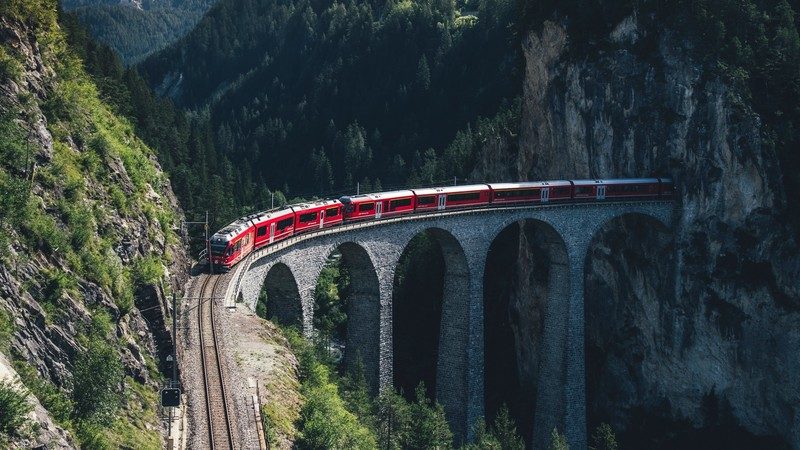
This iconic route connects Zermatt and St. Moritz through 91 tunnels and across 291 bridges. It is considered one of the most scenic journeys in the world.
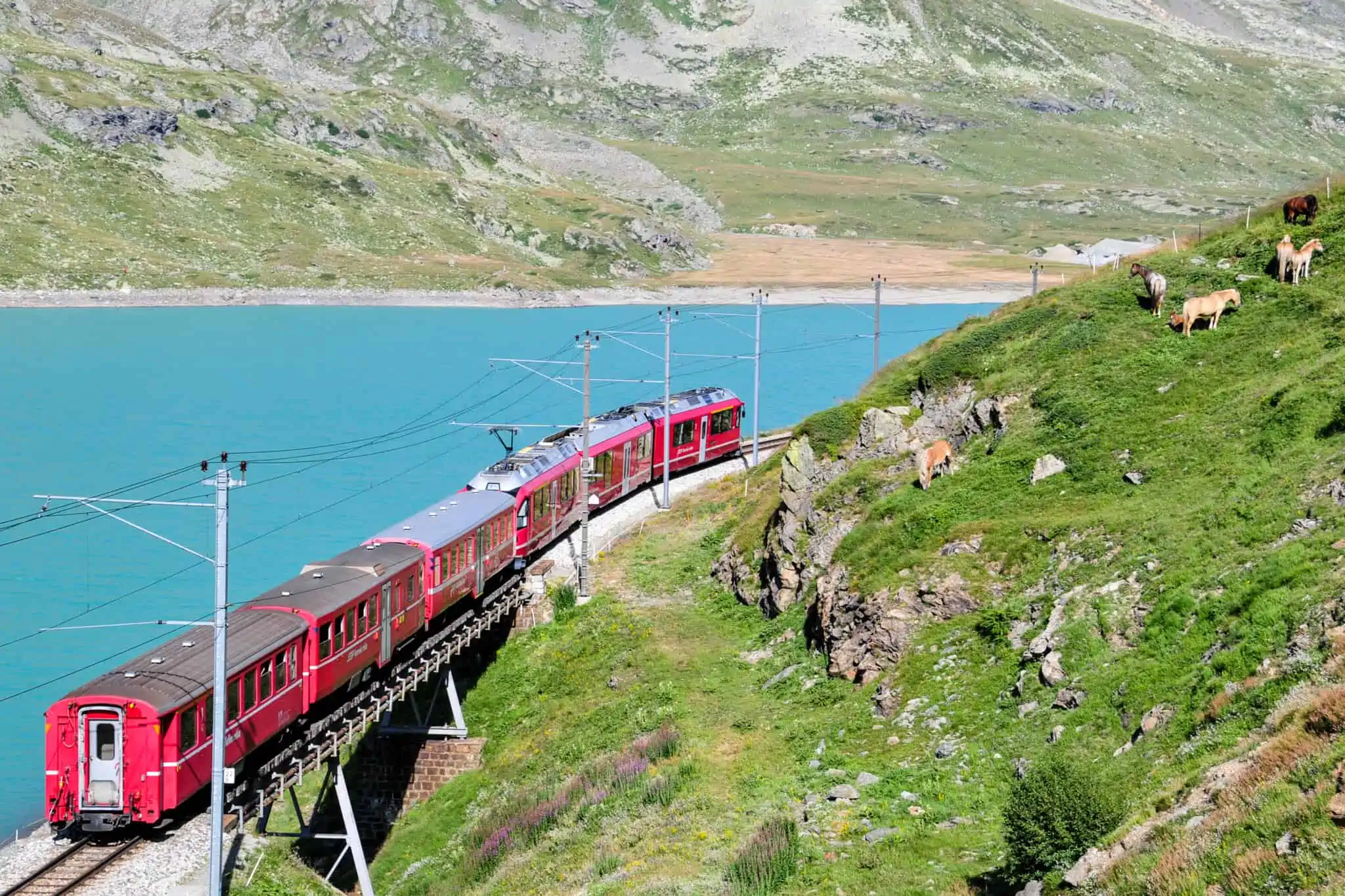
This UNESCO World Heritage route climbs up to 2,253 meters above sea level without cogwheels. It features stunning alpine vistas throughout the year.
Combining train and boat travel, this route highlights the historic Gotthard line. It offers a unique perspective on Switzerland's engineering heritage.
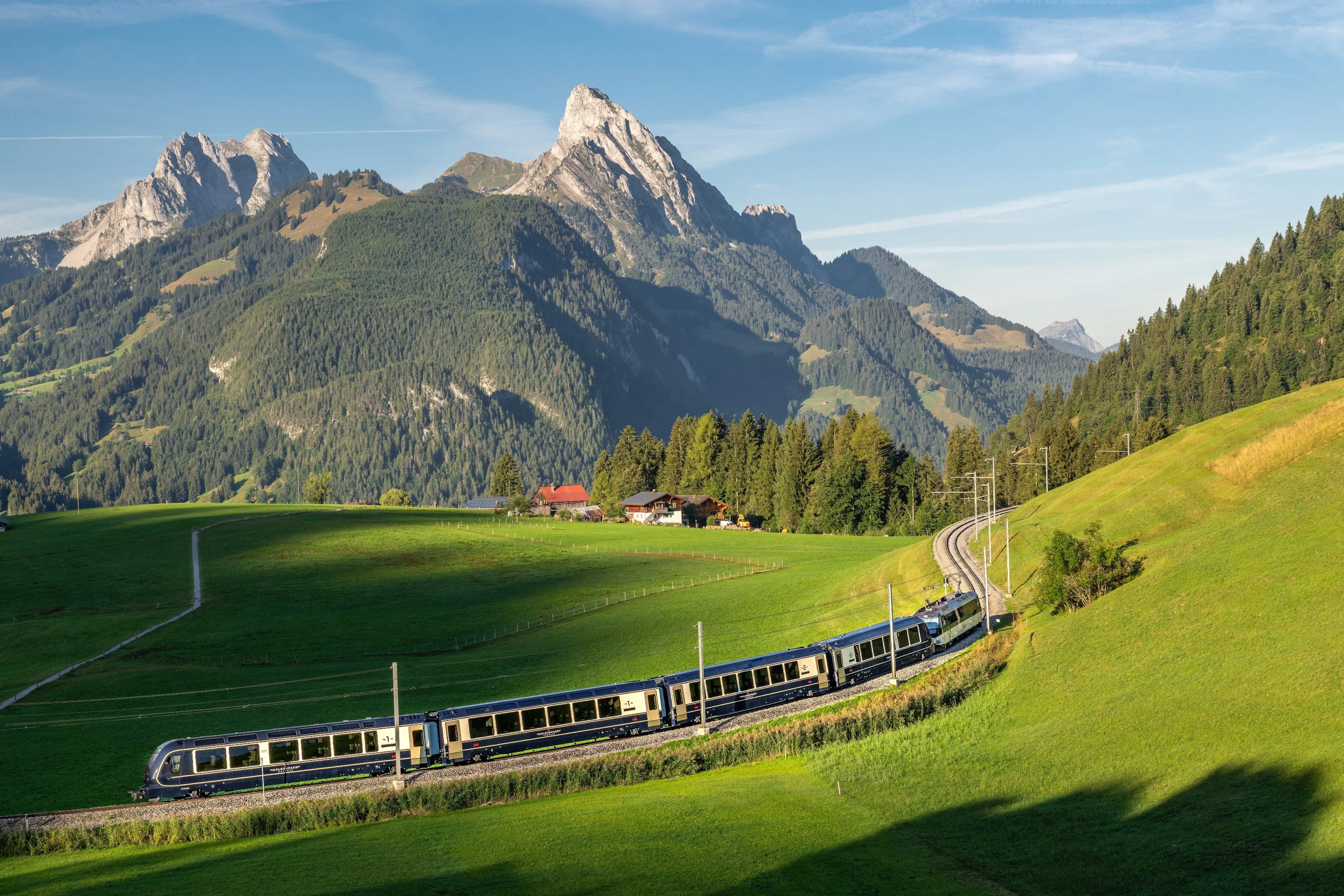
Connecting Lucerne to Montreux, this route offers panoramic views of lakes and mountains. The Belle Epoque carriages provide a nostalgic atmosphere.
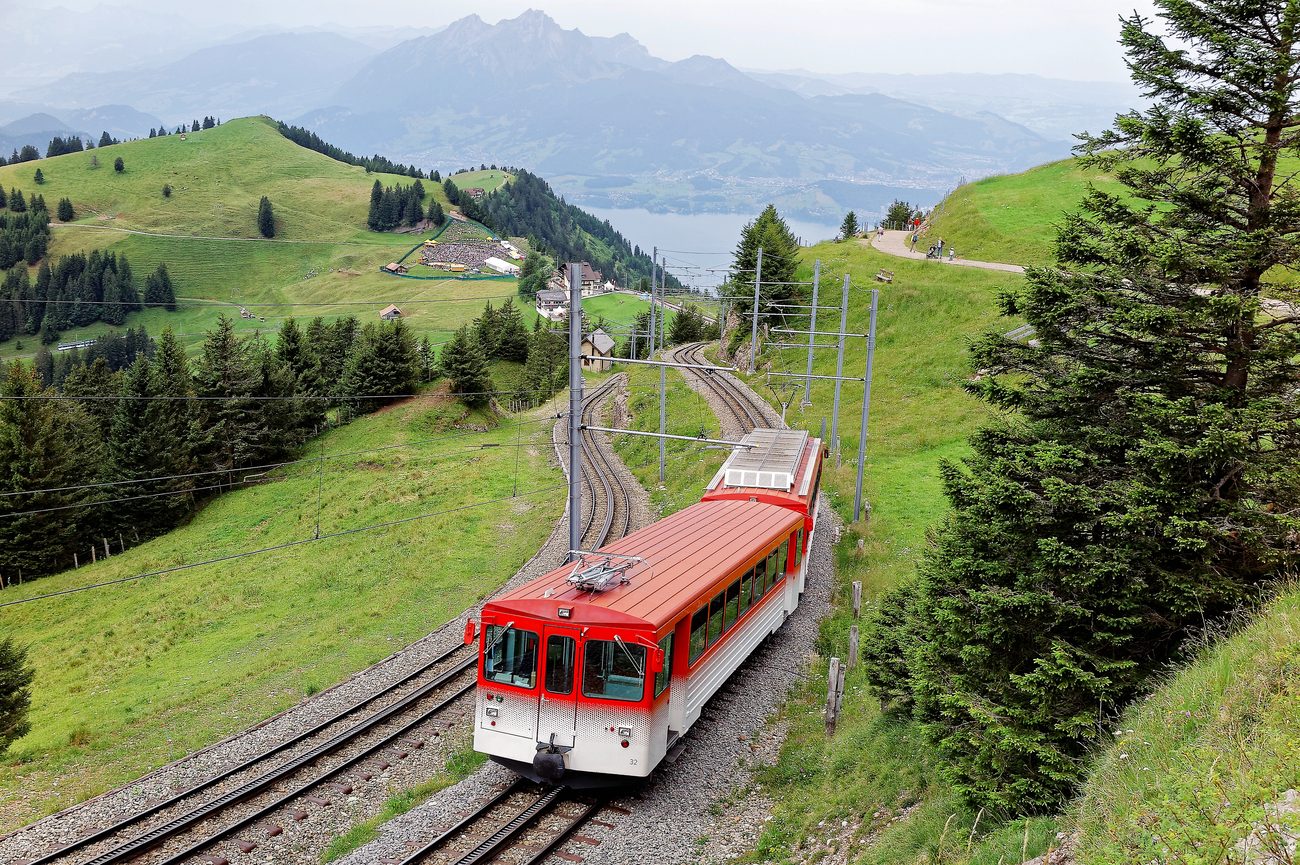
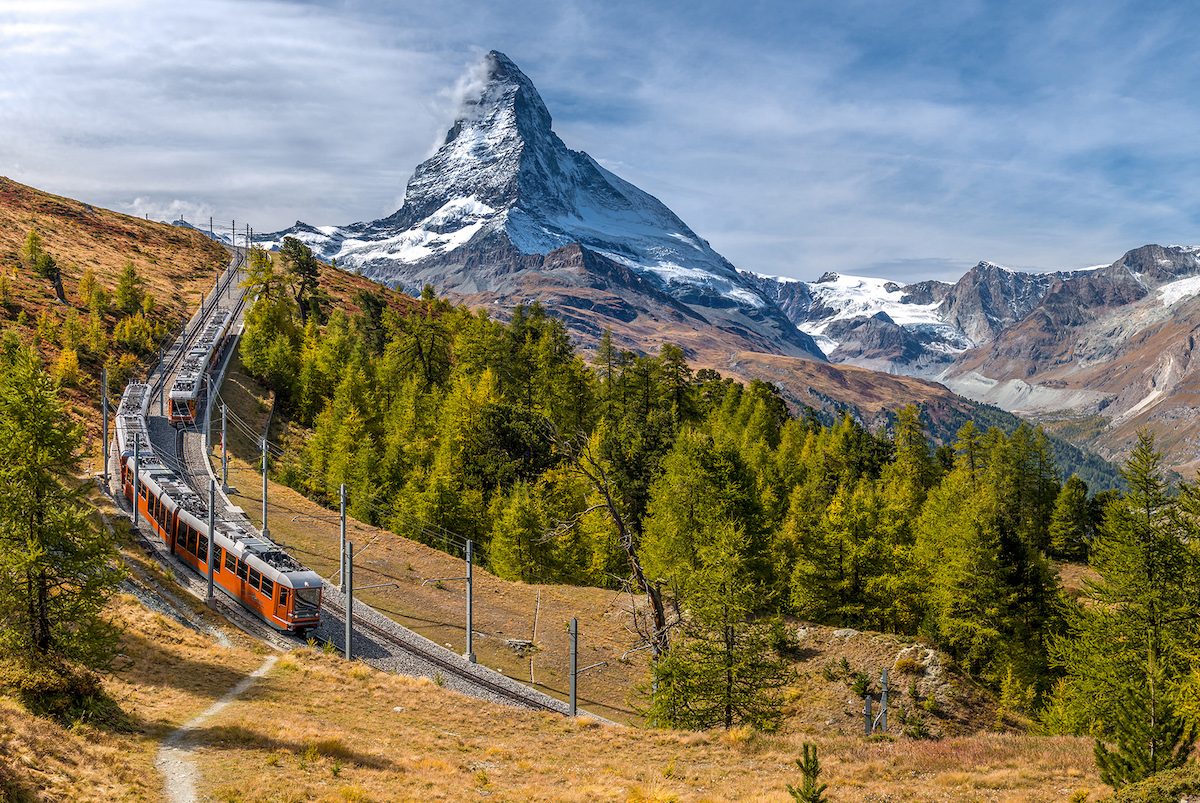
This historic cogwheel railway offers panoramic views over Lake Lucerne. It is fully included with the Swiss Travel Pass for visitors.
You board at Zürich Hauptbahnhof, where digital boards update every twelve seconds. The IC1 to Lugano departs at 32 minutes past the hour, sliding south beneath the platforms with barely a vibration. The carriage smells faintly of floor cleaner and wool upholstery.
You claim a window seat in the upper deck of the double-decker, stow your bag in the overhead mesh, and watch the Limmat recede as the train accelerates past Enge and into the southern suburbs.
Twenty-eight minutes later, you cross the cantonal border into Zug, the lake appearing in flashes between office parks and medieval walls. At Arth-Goldau, the gradient steepens and the train pitches forward into the Gotthard massif. For seventeen minutes, the world outside is tunnel wall and reflected glass. You emerge at Airolo, the Alps replaced by chestnut forests and stone villages clinging to slopes above the Ticino River. The conductor scans your pass with a handheld device, nods, and moves on.
At Bellinzona, three medieval castles rise in sequence above the valley floor, their towers built to control the southern pass routes. The train curves east, hugging the shore of Lake Lugano as the final tunnels open onto palm trees and stucco villas. You arrive 63 minutes after departing Zürich, on time to the minute, and step onto a platform warmed by Mediterranean air.
All the details about your upcoming adventure in one place
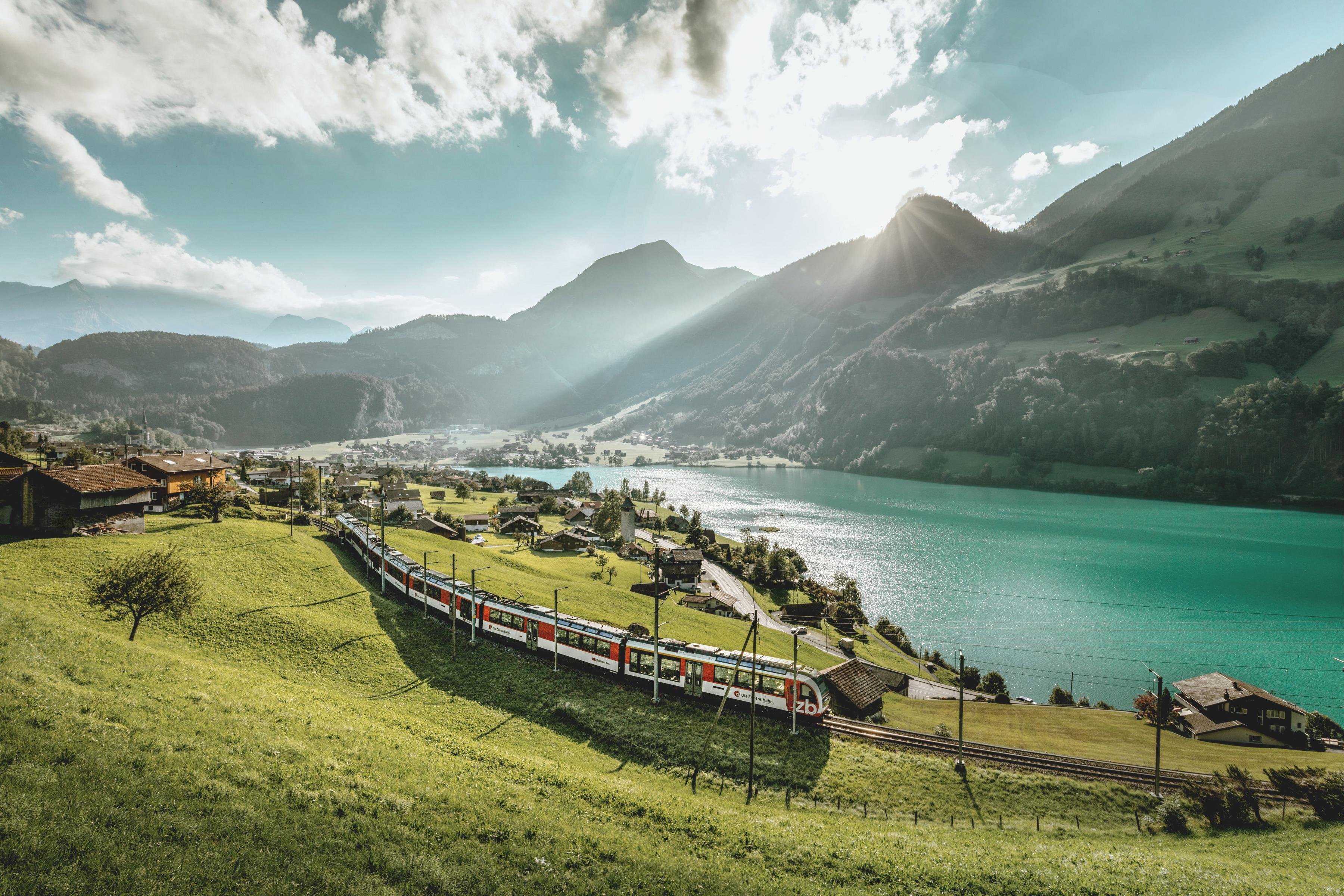
The Swiss Travel System connects mountain villages, lakeside towns, and urban centers through an integrated network of trains, buses, and boats. Swiss train travel offers seamless access to alpine railways, scenic panoramic routes, and UNESCO heritage lines across Switzerland. Whether you're exploring Jungfrau region peaks or gliding along Lake Geneva, swiss train travel tours deliver punctual service and first-class engineering.
Switzerland operates 5,317 kilometres of track with a punctuality rate above 92 percent, the highest in Europe. The Swiss Travel System unites the national railway, regional lines, postal buses, and lake steamers into a single fare structure that has carried over 500 million passengers annually since 2019.
What began in 1847 with a 23-kilometre line between Zürich and Baden now spans the Alps, the Jura, and the Plateau, connecting 13,000 daily services across a country smaller than the Netherlands.
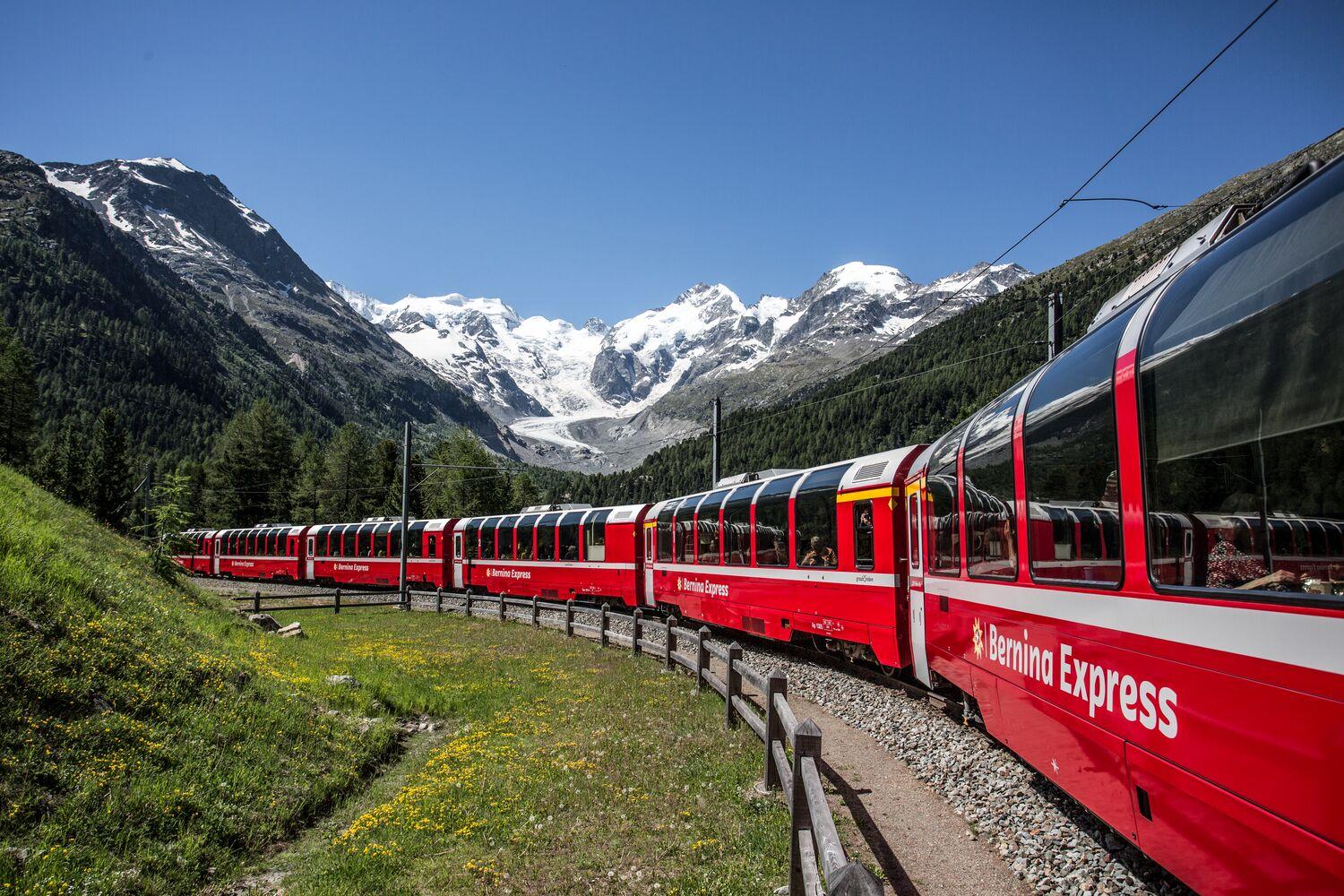
Swiss train travel is built on standardised gauge, electrified catenary, and a timetable interval structure called Taktfahrplan, introduced in 1982. Trains depart major hubs at the same minute each hour, and connections hold to a three-minute transfer window. The Gotthard Base Tunnel, opened in 2016, cut the Milan–Zürich journey by 45 minutes and remains the world's longest rail tunnel at 57 kilometres. The Bernina Express climbs 2,253 metres without a rack, crossing 196 bridges and 55 tunnels between Chur and Tirano. The Glacier Express, operating since 1930, takes eight hours to traverse 291 kilometres, earning the title of slowest express train in the world.
The Swiss Travel Pass grants unlimited access to the SBB network, including urban trams, postal buses, and museum entry, with validity periods from three to fifteen consecutive days. Regional passes cover the Berner Oberland, Graubünden, and Ticino, while the Half Fare Card reduces point-to-point tickets by 50 percent for a calendar year. A swiss train travel card issued by SBB includes the mobile app with real-time delay notifications, platform changes, and seat reservation management. The system carries no premium pricing for peak hours, and children under sixteen travel free when accompanied by a parent holding a family card.
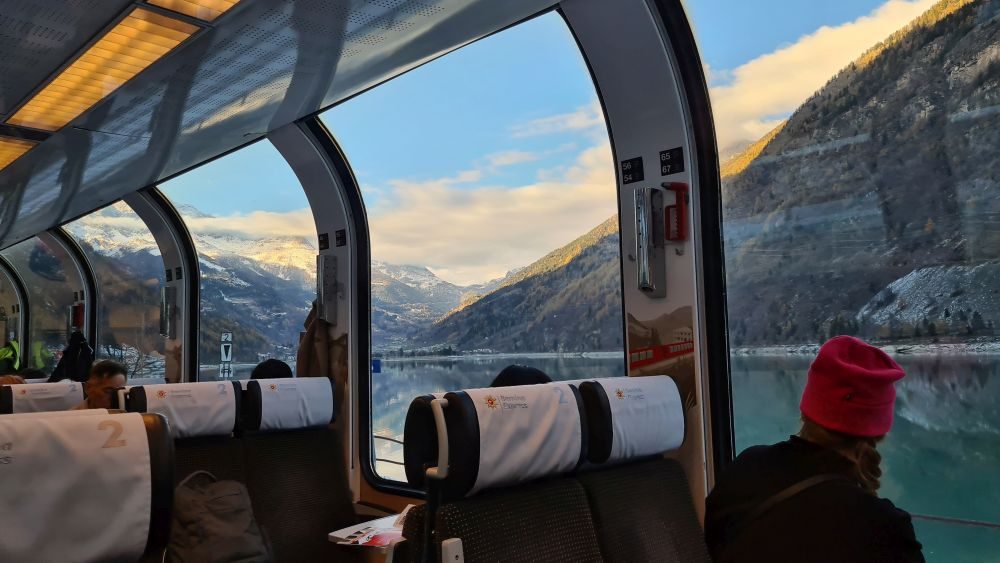
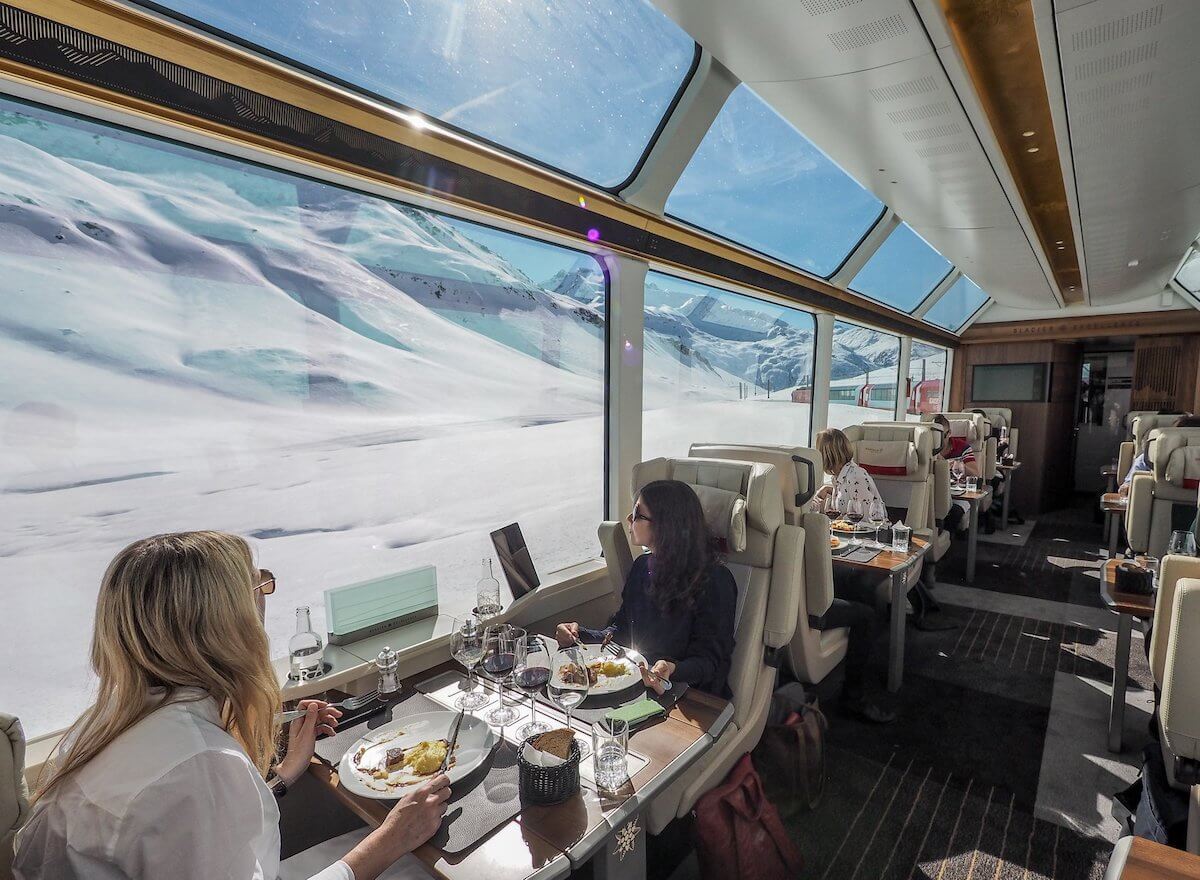
Panoramic carriages with floor-to-ceiling glass debuted on the GoldenPass line in 2022, linking Montreux to Interlaken with a variable-gauge bogie that eliminates the historic transfer at Zweisimmen. The Lötschberg route threads south from Bern to Valais through a 34-kilometre tunnel beneath the Bernese Alps, emerging at Visp within sight of the Matterhorn. First-class compartments offer leather seating, power outlets, and complimentary Wi-Fi, while dining cars serve regionally sourced menus prepared onboard. The swiss train travel planner integrates timetables across 270 operators, displaying platform numbers, transfer walking times, and accessibility features for mobility-impaired passengers.
The Gotthard Base Tunnel cut the Milan–Zürich journey by 45 minutes and remains the world's longest rail tunnel at 57 kilometres.
There is no formal dress code for swiss train travel. Wear comfortable clothing and layers suitable for changing alpine weather.
Luggage may be brought on board provided it fits in designated racks or overhead areas. Stations offer lockers for secure storage during your swiss train travel adventure.
Personal photography is encouraged throughout the network, including the scenic routes. Respect fellow passengers' privacy during your swiss train travel journeys.
Children under 16 travel free with a parent via the Swiss Family Card. This makes family-oriented swiss train travel a cost-effective option for visitors.
Most trains and stations in the swiss train travel network are designed for inclusive access. Contact SBB for specific assistance services for passengers with reduced mobility.
Food and non-alcoholic beverages are permitted on trains. Many intercity swiss train travel routes feature dining cars serving regional Swiss specialties.
Opening Hours
Mon–Sun: 00:00–23:59
Address
Lagerstrasse 33, 8004 Zürich, Switzerland
Swiss Travel System
Network fully accessible for all travellers
Best arrival
06:00–22:00 for off-peak comfort
Storage
Available at major railway stations
Navigation
Use SBB Mobile for live scheduling
Cancellation rules vary by ticket type purchased through the Swiss Travel System. Consult the SBB website for specific refund windows and conditions applicable to your pass.
Recommended time
Half a day
Planning your swiss train travel requires understanding that network frequency remains high throughout the day. Using the official app allows for seamless transitions between regional connections and the scenic rail network, ensuring your swiss train travel tour remains on schedule. We suggest utilizing the best arrival window of 06:00–22:00 to avoid peak platform congestion while accessing Swiss rail transit nodes. Please note that securing swiss train travel tickets in advance helps minimize wait times during your transit across the country.
Crowd levels through the day
The story of Swiss train travel begins not with a grand vision but with urgent necessity. In 1847, Switzerland opened its first railway line—a modest 23-kilometer stretch connecting Zürich to Baden—built primarily to link industrial centers and compete with neighboring Austria and France. Within two decades, private companies had carved routes through valleys and around lakes, but the Alps themselves remained a formidable barrier. That changed in 1882 when the Gotthard Base Tunnel opened after eleven years of brutal construction that claimed 199 lives. The 15-kilometer bore connected the German-speaking north with Italian-speaking Ticino, transforming Swiss train travel from regional convenience into a genuine national network. The early 20th century brought electrification and mountain rack railways. The Jungfrau Railway, completed in 1912, tunneled directly through the Eiger to reach Europe's highest station at 3,454 meters. These engineering feats were not tourist indulgences but deliberate infrastructure investments, funded by a federal government determined to unify a multilingual federation through steel and timetables. In 1902, Switzerland nationalized most private lines into the Swiss Federal Railways (SBB), establishing the centralized planning that still defines the system today. Standardized signaling, synchronized schedules, and integrated ticketing followed. Post-war decades saw the network expand into every alpine valley, often at a loss, defended as a public service rather than a profit center. The 1982 timetable reform introduced the Taktfahrplan—clockface scheduling where trains depart at the same minute every hour—a model since adopted worldwide. In 2016, the 57-kilometer Gotthard Base Tunnel became the world's longest rail tunnel, cutting travel time between Zürich and Milan by an hour. Modern swiss train travel tours now glide through corridors that took dynamite, compressed air drills, and decades of political compromise to carve. The network remains 99% publicly owned, a deliberate choice reaffirmed in multiple referendums.
Switzerland opens its first railway line, a 23-kilometer route linking Zürich to Baden.
The Gotthard Tunnel opens after eleven years of construction, connecting northern Switzerland with Ticino and claiming 199 lives.
The federal government nationalizes most private railways, forming Swiss Federal Railways (SBB) to unify operations.
The Jungfrau Railway reaches Europe's highest station at 3,454 meters, tunneling through the Eiger massif.
Switzerland introduces the Taktfahrplan, a clockface scheduling system where trains depart at fixed intervals every hour.
The 57-kilometer Gotthard Base Tunnel becomes the world's longest rail tunnel, reducing Zürich–Milan travel time by one hour.
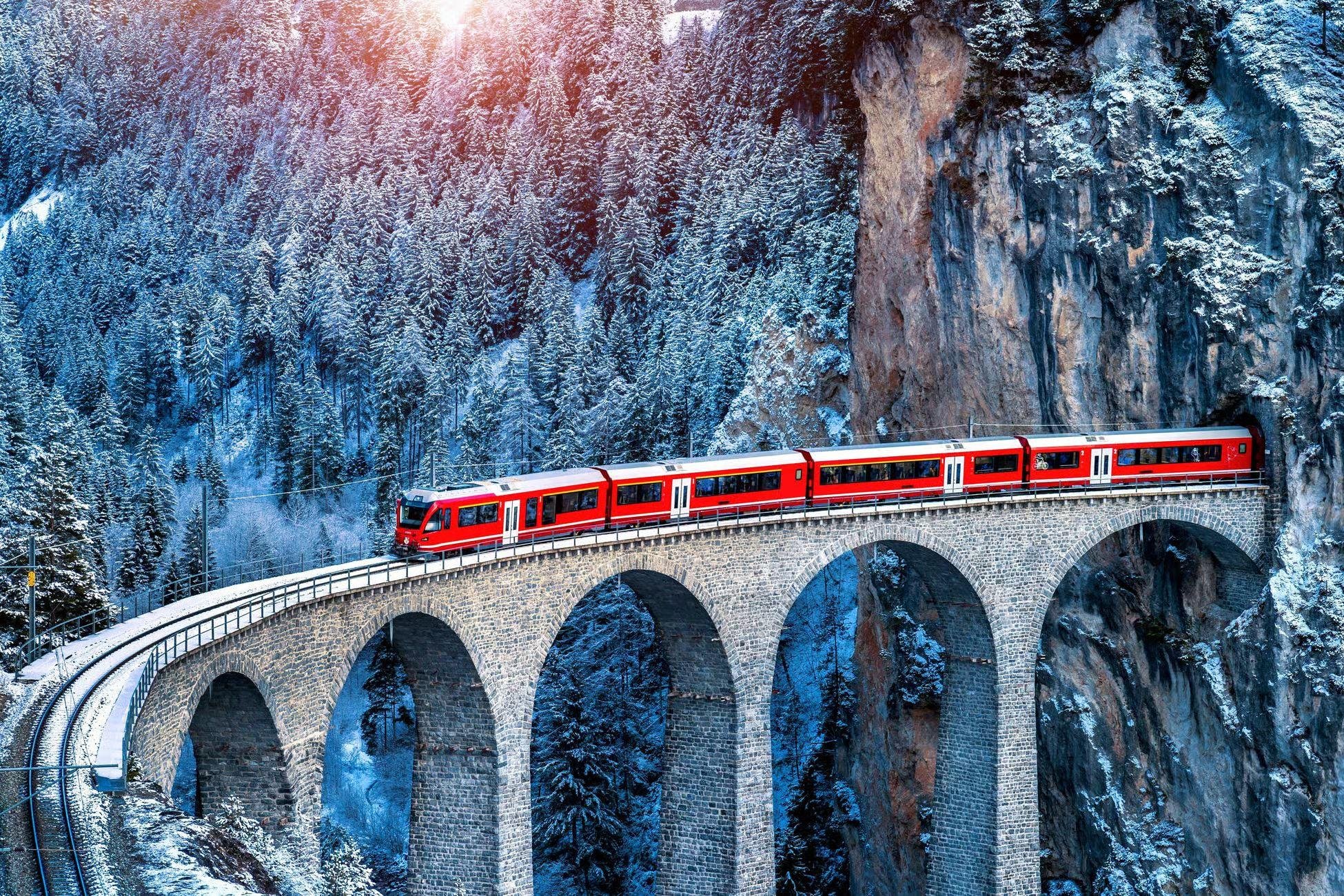
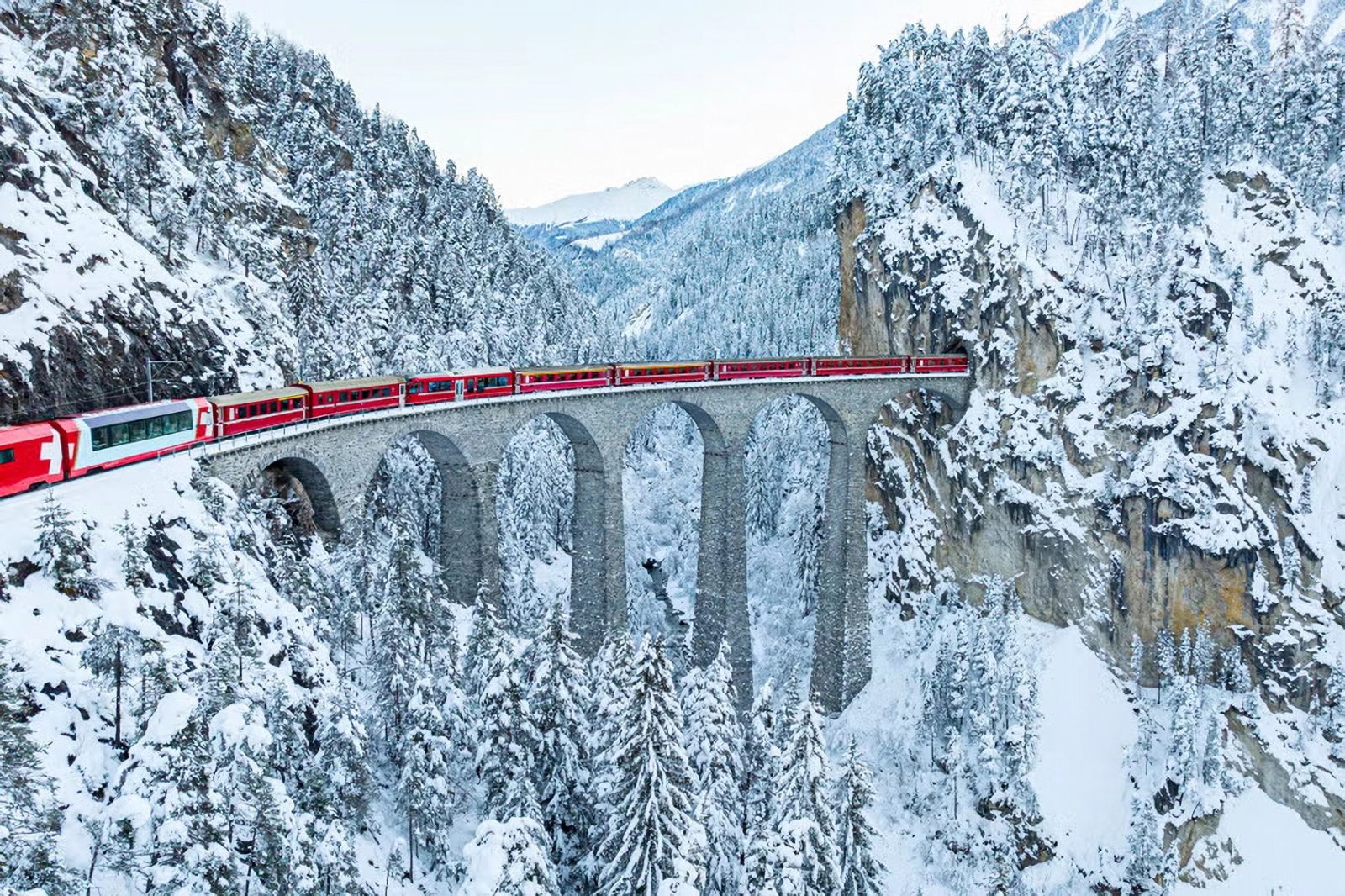
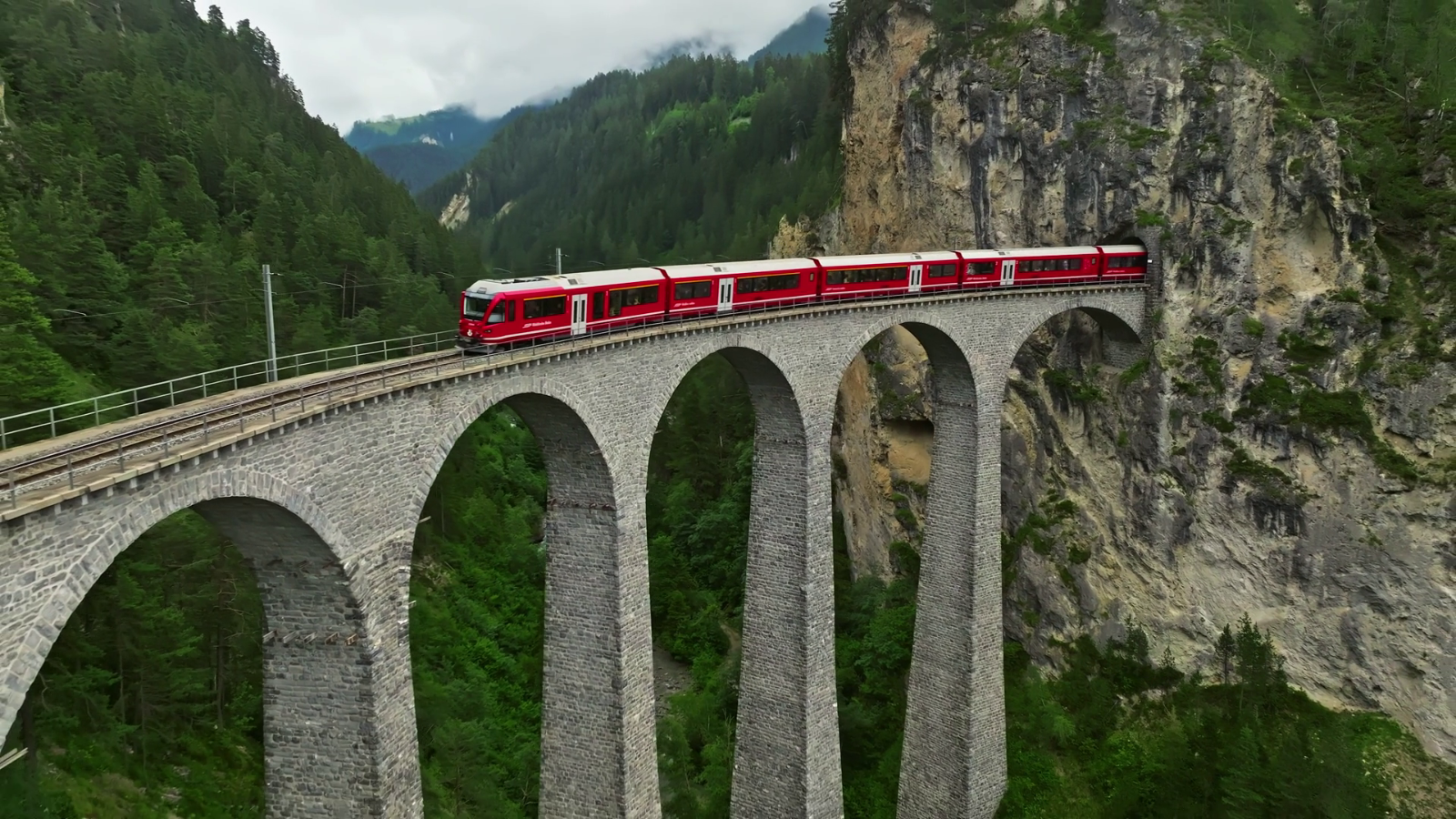
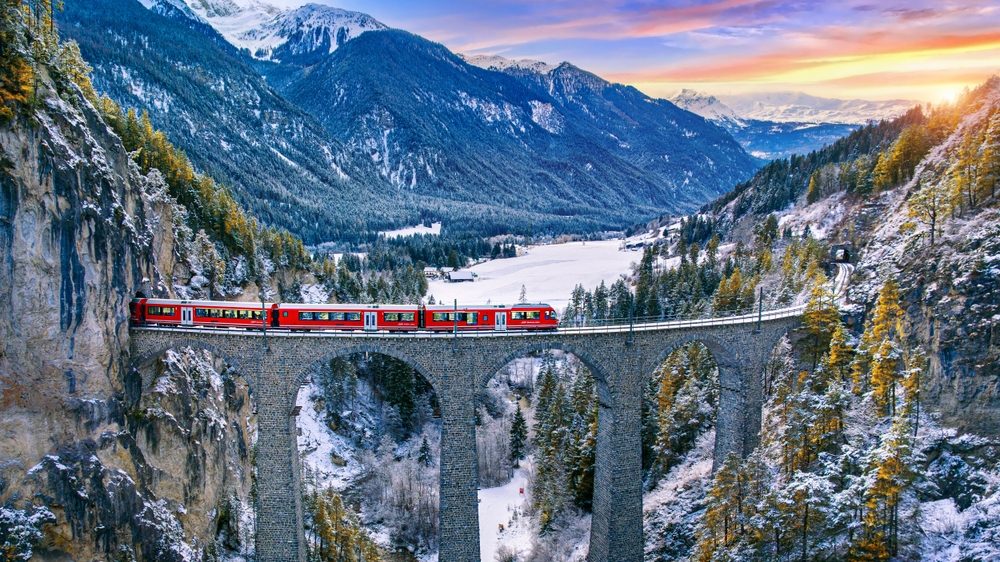
Stand at the designated viewpoint near Filisur for a side-profile perspective of the curved limestone masonry. This location is a highlight of swiss train travel tours and requires a short hike from the station.
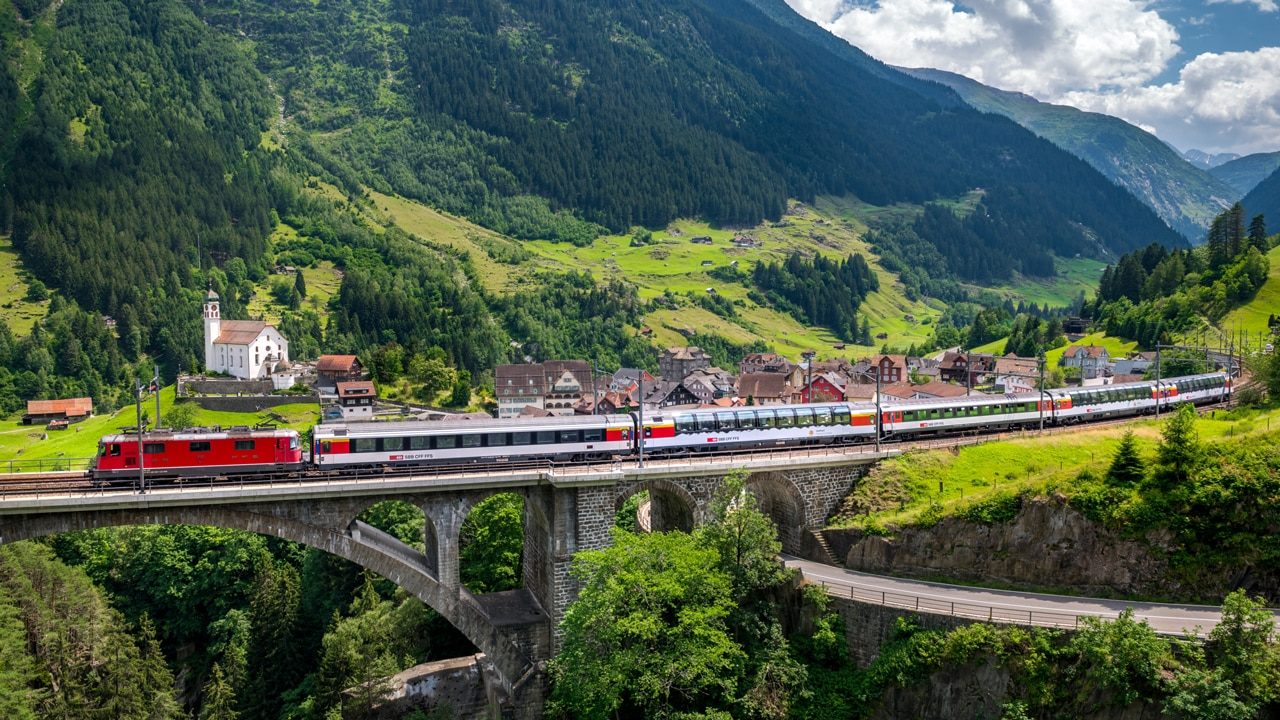
Capture the dramatic hairpin turns and church spires from the window of the scenic carriage. Efficient swiss train travel tour framing is easiest in the panoramic cars during the ascent toward the tunnel.
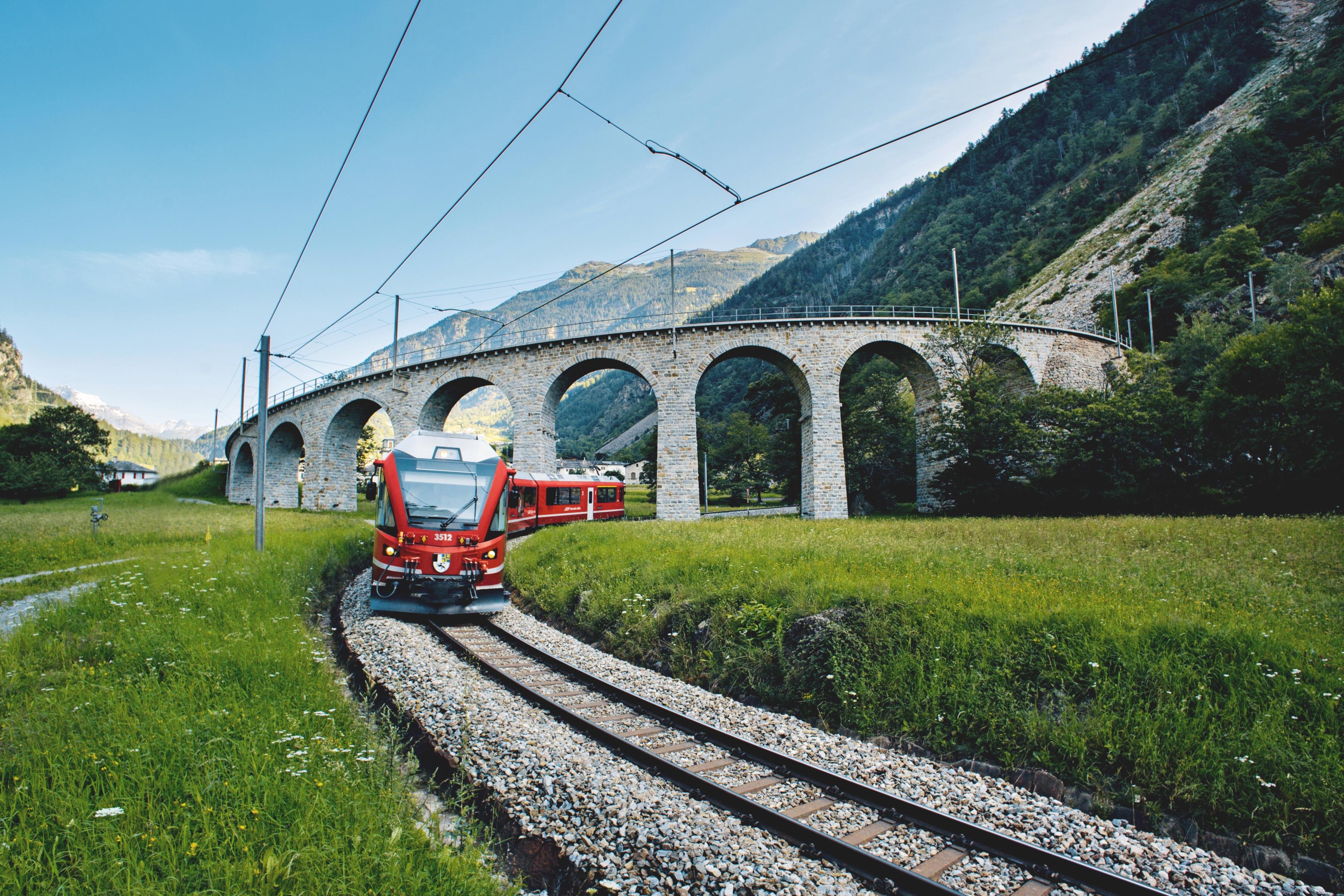
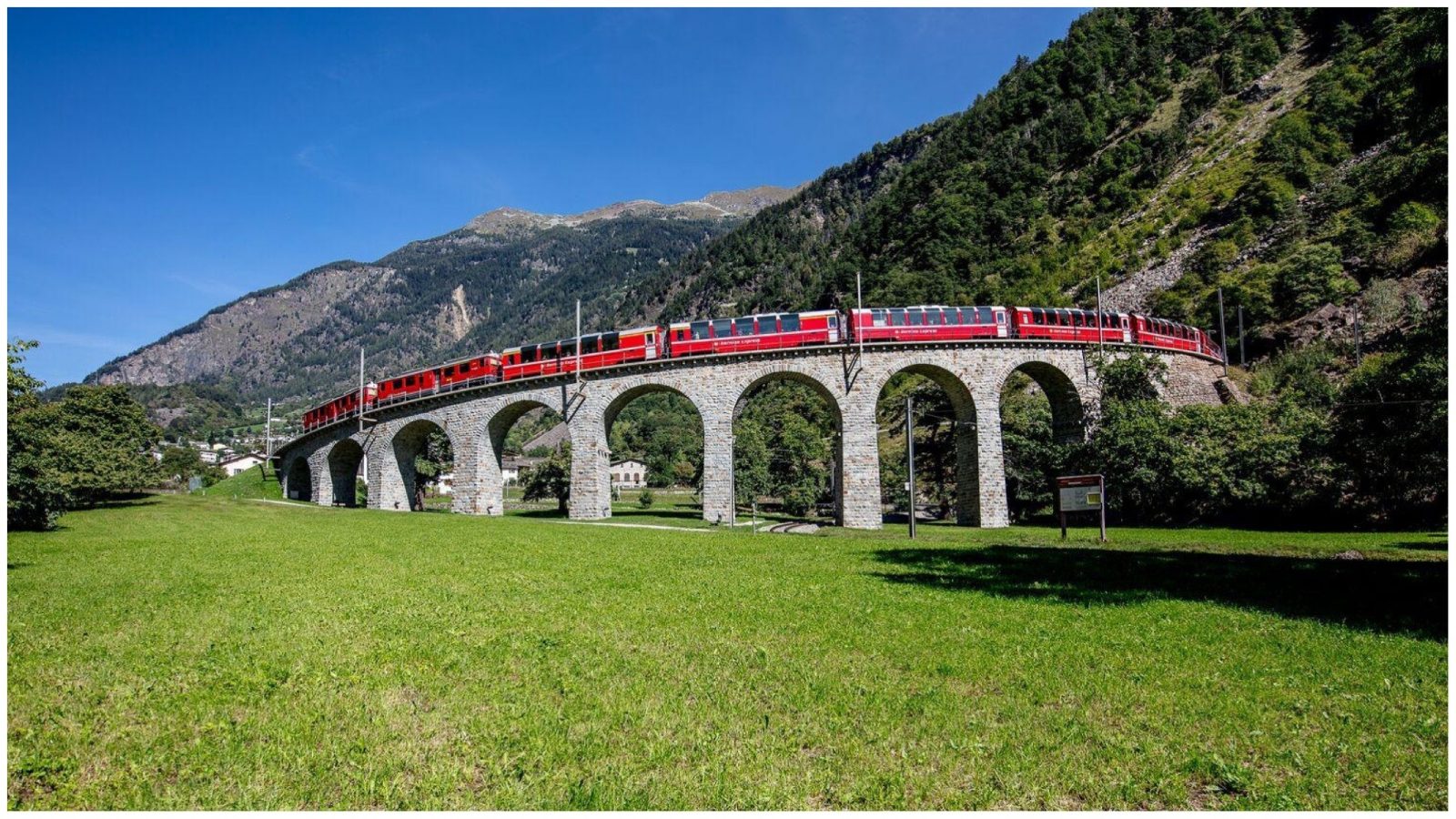
Position yourself at the Brusio spiral viaduct where the tracks circle to gain elevation. Photographers often use this spot to document swiss train travel tickets in action against the alpine landscape.
Find a window seat on the north side to photograph the steep, white limestone walls of the Swiss Grand Canyon. This segment defines many professional portfolios for those pursuing a swiss train travel experience.
Navigating the country via swiss train travel is highly efficient for parents, thanks to a well-connected rail network that accommodates strollers and young travelers with ease. Exploring the nation through Swiss rail journeys offers a stress-free environment where children can enjoy scenic views while you manage logistics comfortably.
Most regional and long-distance trains have low-floor access, making it simple to roll strollers directly onto the carriage; for older trains, prioritize platforms marked with wheelchair symbols. When utilizing swiss train travel tours, fold your stroller if the carriage is crowded to ensure space for other passengers.
The Swiss Family Card allows children under 16 to travel for free when accompanied by a parent, providing excellent value for your swiss train travel tickets. Always keep this pass handy, as conductors will check it alongside your own travel documents.
Many intercity trains feature dedicated family zones or play areas, while most regional connections offer baby-changing tables in the restrooms. If you require specific amenities, checking the official site or using the app helps identify trains equipped with family-friendly carriages.
Given the extensive rail network, we suggest using the best arrival window of 06:00–22:00 to avoid rush hours and ensure you have ample time to board with your gear. Taking advantage of this swiss train travel tour pacing allows for a relaxed journey during the quieter off-peak times.
Real experiences from real travelers
We took the Glacier Express from Zermatt to St. Moritz and the panoramic windows made every moment special. The route through the Oberalp Pass offered views we could never reach by car. Staff were helpful with our Swiss Travel Pass and the onboard commentary added context to each valley and village.
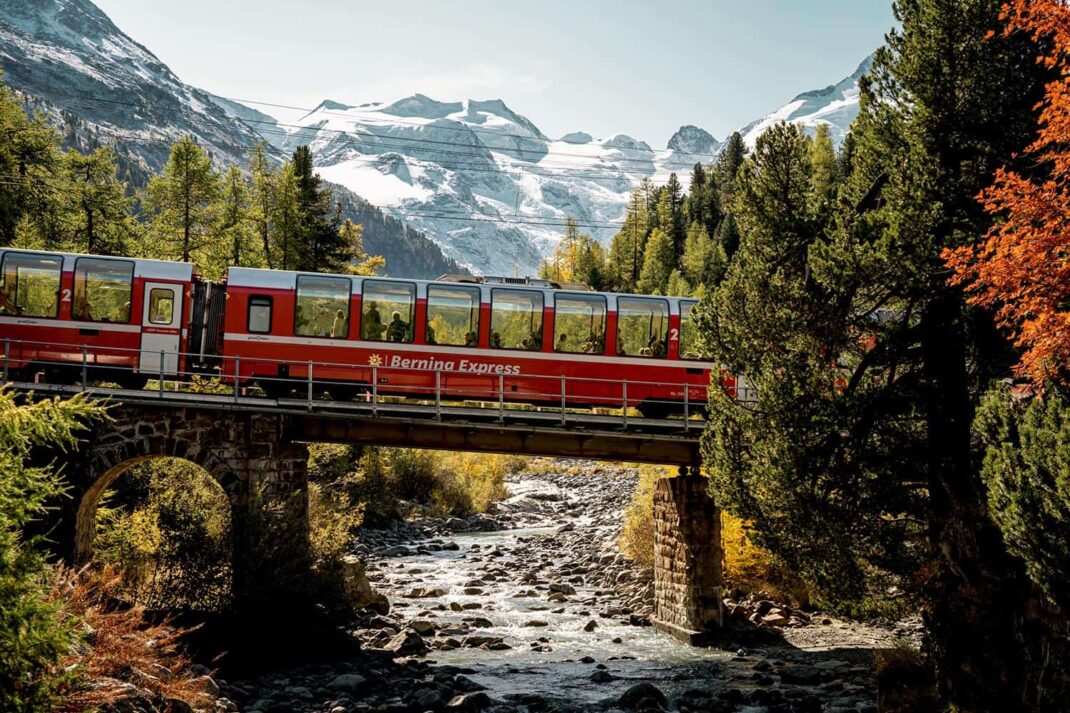
Swiss train travel offers an unmatched way to experience Alpine landscapes without the stress of mountain driving. We rode the Bernina Express and watched glaciers, viaducts, and turquoise lakes pass by our window. The engineering alone is worth the trip.
The cogwheel trains in Switzerland are engineering marvels. We rode up to Jungfraujoch and the climb was smooth even on steep grades. Views of the Aletsch Glacier from the top station were breathtaking, and the train made it accessible for all fitness levels.
Switzerland's integrated rail system makes travel between regions seamless. We used the Swiss Travel Pass on multiple scenic routes including the GoldenPass line. Peak summer months bring crowds, so book panoramic seats early if that matters to you.
Swiss train travel tours connected us to mountain villages we'd never have found otherwise. The Montreux-Oberland line took us through vineyards and into high valleys in a single afternoon. Punctuality and comfort were flawless throughout our week of travel.
We spent five days hopping between Interlaken, Luzern, and Lugano using only trains. The SBB app made scheduling easy and the panoramic cars on the Gotthard line turned transit into sightseeing. Pack snacks but don't miss the onboard Swiss chocolate.
Took the Glacier Express in late March and the snow-covered peaks along the route were postcard-perfect. Heated panoramic cars kept us comfortable while we watched avalanche barriers and tiny alpine chapels slide past. Swiss efficiency makes this kind of journey stress-free.
We debated renting a car but chose swiss train travel tickets instead and have no regrets. The Bernina line took us from palm trees in Lugano to glaciers near St. Moritz in three hours. Every tunnel exit revealed a new climate zone.
The first-class panoramic cars offer spacious seating and the elevated sightlines make photography easy. We covered the entire Golden Triangle route over four days. Some stations lack elevators, so be ready for stairs with luggage.
Swiss train travel tour options are plentiful but we built our own itinerary using the Half Fare Card. The Lötschberg line through the Valais was a highlight—deep gorges, wooden chalets, and vineyard terraces all in one morning. Onboard wifi worked in most valleys too.
Everything you need to know for your journey
The network operates 24/7, with SBB ticket offices generally following local business hours. Arrivals between 06:00–22:00 are recommended for a quieter experience.
Entrance to the rail network is 0 CHF, though a valid ticket or pass is required for all travel.
You can buy tickets via the official site or SBB Mobile app.
Yes, children under 16 travel free with a parent using the Swiss Family Card for family swiss train travel.
Autumn is excellent for swiss train travel due to clear mountain views and fewer crowds.
Yes, provided it is stowed safely in designated areas during your swiss train travel trip.
Some scenic trains require reservations, which are extra. Standard swiss train travel does not require them.
Bring your passport and your ticket. Pack layers for varied weather during your swiss train travel journey.
Yes, use SBB Mobile to manage your swiss train travel schedule and tickets.
Join thousands of happy travelers who have discovered this incredible experience
Book Your Experience Now