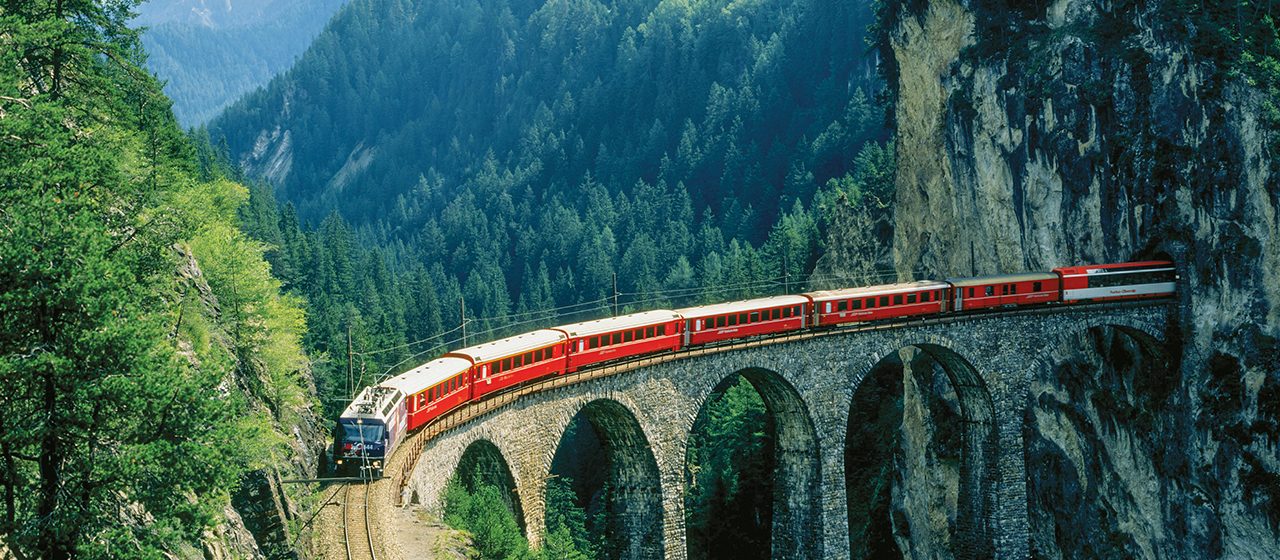
11 hr
Bernina Express & St. Moritz Day Trip from Milan
- Expert local guide
- Small group
- Skip-the-line access
- Free cancellation
Swiss Train Ride Through Alps — Bernina Express & Glacier Pass Routes
Panoramic carriages through glaciers and valleys, rail passes unlock 29,000 kilometers
Compare fares, pick the fit — all bookings are mobile-voucher and eligible for free cancellation where shown.
11 hr
360 hr
5 hr 30 min
Choosing the right fare depends on how you plan to navigate the Swiss Travel System for your swiss train ride through alps. Whether you seek total freedom or specific alpine express routes, understanding the difference between system-wide passes and individual seat reservations is essential for a seamless panorama rail journey.
|
Top pick Swiss Travel Pass Unlimited Rail/Bus/Boat |
Point-to-Point Ticket Specific Route/Time | |
|---|---|---|
| Access scope | All SBB network and panoramic trains | One specific journey between two stations |
| Flexibility | Full travel freedom during pass validity | Valid only for the selected connection |
| Best for | First-timers exploring multiple mountain regions | Travelers with a fixed itinerary |
| Reservation requirements | Mandatory for premium panoramic train seats | Mandatory for premium panoramic train seats |
| See tickets & prices |
Verdict: For the most convenient swiss train ride through alps tours, select the Travel Pass to explore the high-altitude landscape with ease, while those on a rigid schedule should prioritize specific swiss train ride through alps tickets.
Worth it for bucket-list scenery seekers
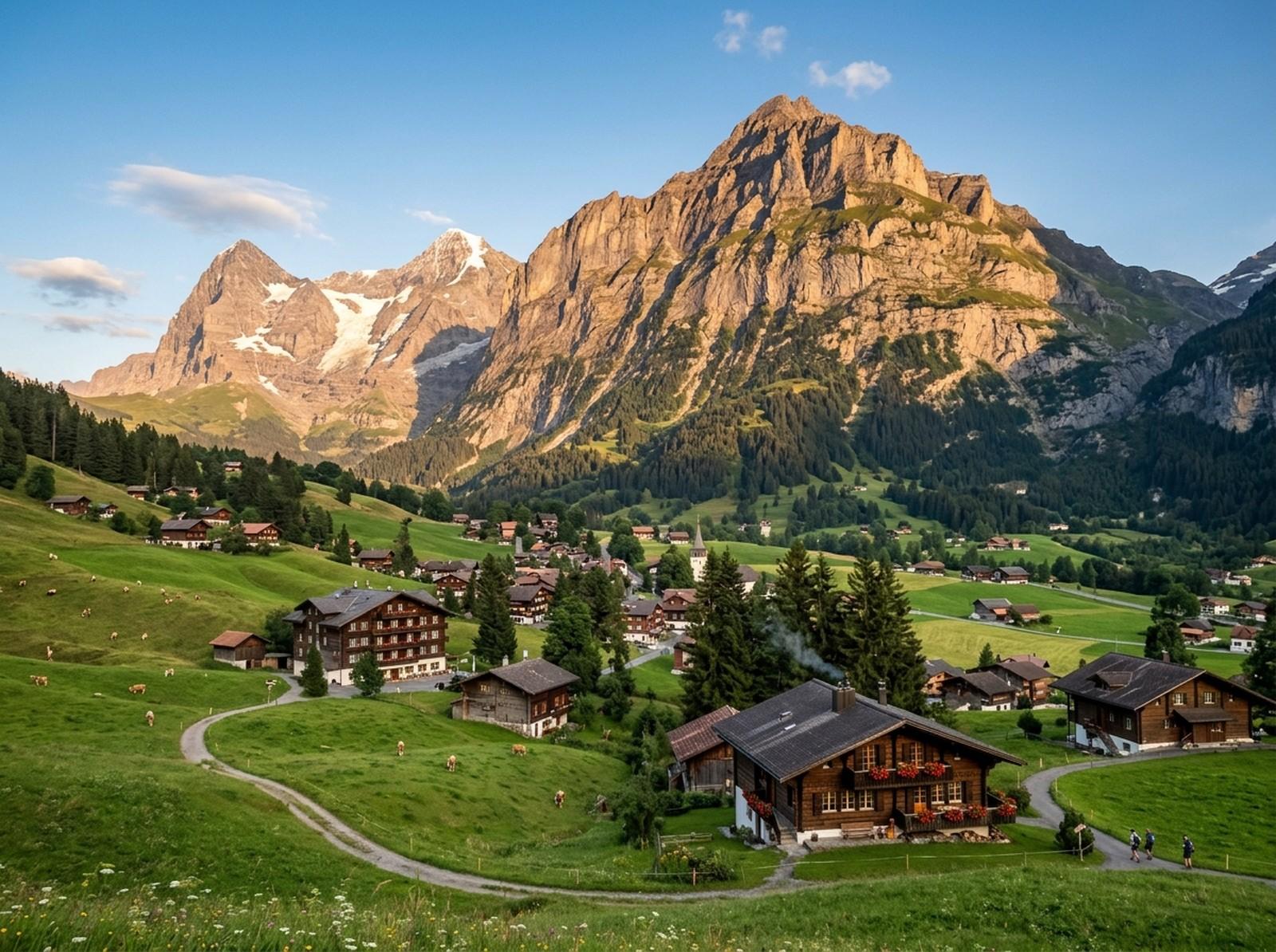
A swiss train ride through alps delivers UNESCO-listed mountain panoramas through engineering marvels like the Bernina Express and cogwheel railways ascending Mt. Pilatus, with no single entrance fee—you pay per route or pass. Day trips from Milan (Bernina Express & St. Moritz) showcase glaciers, alpine villages, and the Landwasser Viaduct, while the Swiss Travel Pass unlocks unlimited rail, bus, and boat access across the network, turning multi-day exploration into seamless value. Morning departures between 08:00–10:00 capture the clearest summit views before midday haze. Panoramic carriages frame the Jungfrau massif, Matterhorn approaches, and turquoise mountain lakes without obstruction. For travelers prioritizing iconic Alpine train routes over urban sightseeing, the investment pays off in postcard-grade scenery and logistical ease; casual visitors making a single overnight stop may find per-segment tickets sufficient.
Bottom line: If Alpine scenery tops your Switzerland wishlist, swiss train ride through alps tours justify the fare with world-class mountain access few roads can match.
They serve different travel styles; most visitors who do both call the train the more immersive experience for viewing mountain scenery. Secure your swiss train ride through alps tickets early to ensure seating on these high-altitude rail corridors.
|
Top pick Swiss Train Ride |
Panoramic Bus Tours | |
|---|---|---|
| Transport Type | Electric rail carriages | |
| Diesel-powered motorcoaches;Capacity | High volume transit | |
| Small group transport;Route Variety | Fixed tracks through tunnels | |
| Flexible road mountain passes;Accessibility | Broad mountainous access | |
| Limited to paved roads;Comfort Level | High with dining cars | |
| Variable bus seating;Viewing Angle | Panoramic window views | |
| Variable window visibility;Best Use Case | Long-distance trans-Alpine travel | |
| See tickets & prices |
Verdict: Choose a swiss train ride through alps tour for unparalleled comfort and access to remote glacial valleys that bus routes cannot reach.
Hand-picked experiences loved by thousands of travelers
12 hours 30 minutes
Free Cancellation
Ride the legendary red train through UNESCO-listed alpine landscapes and explore Switzerland's glamorous mountain resort
3, 4, 6, 8, or 15 days
Free Cancellation
All-in-one ticket for unlimited travel across Switzerland's railways, buses, boats, and urban transit
12 hours 30 minutes
Free Cancellation
Journey through Swiss Alps by panoramic train and coach, visiting St. Moritz and crossing glacial passes
Full day experience
Free Cancellation
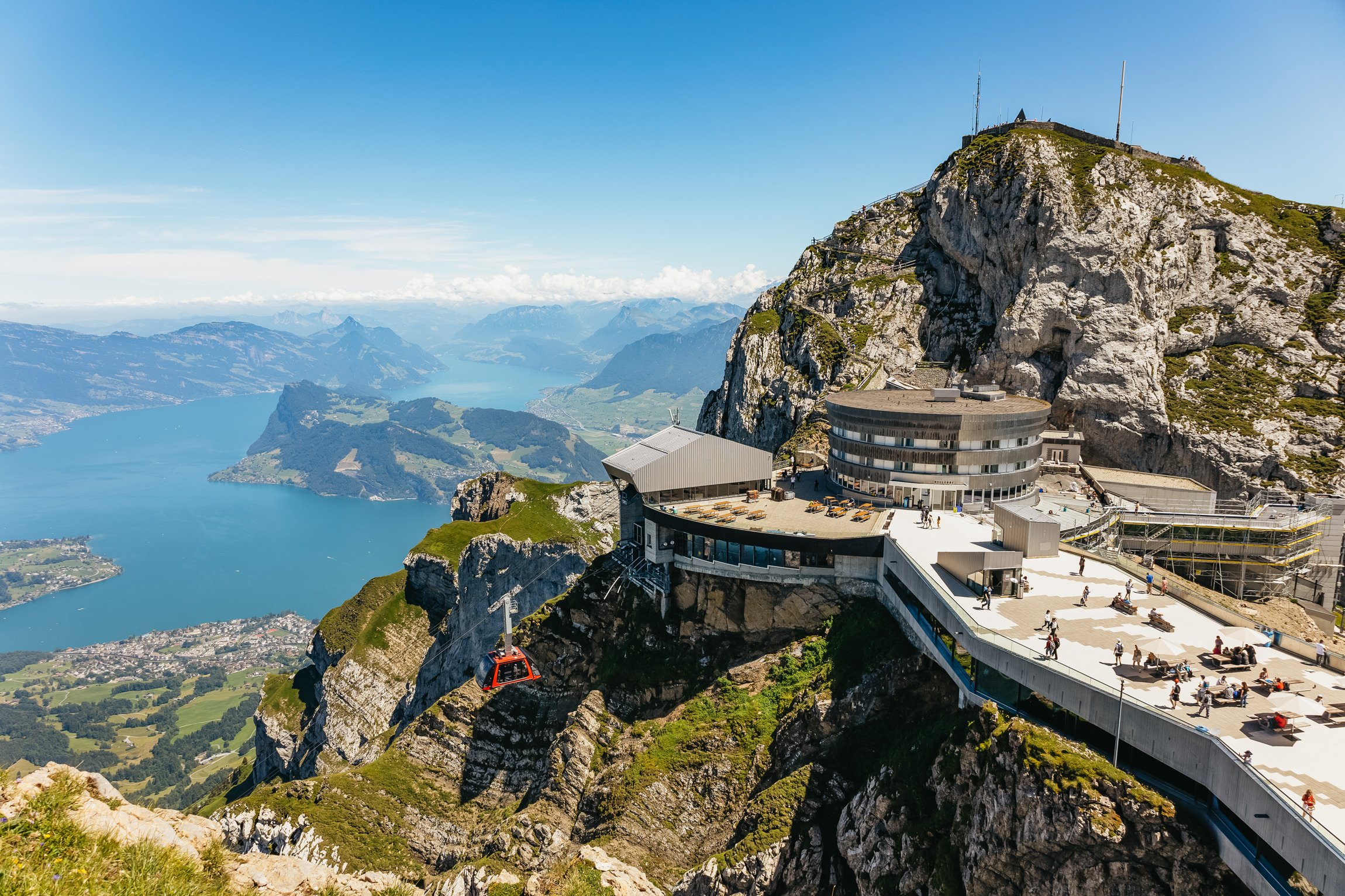
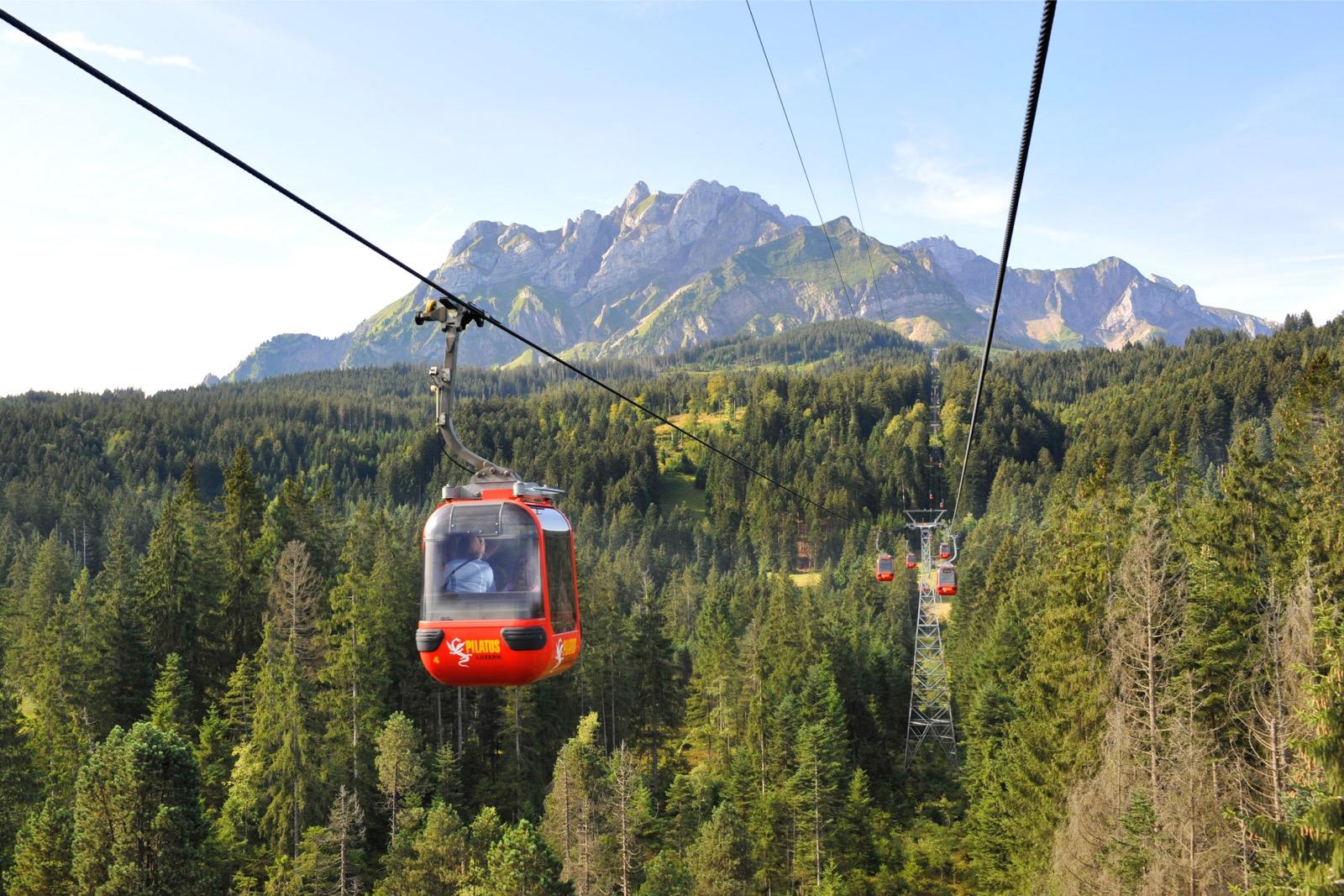
Ascend via gondola and Dragon Ride cable car, summit at 2,132m, descend on the world's steepest cog railway
11 hours
Free Cancellation
Journey to Europe's highest railway station with a private chauffeur, exploring alpine lakes and glaciers
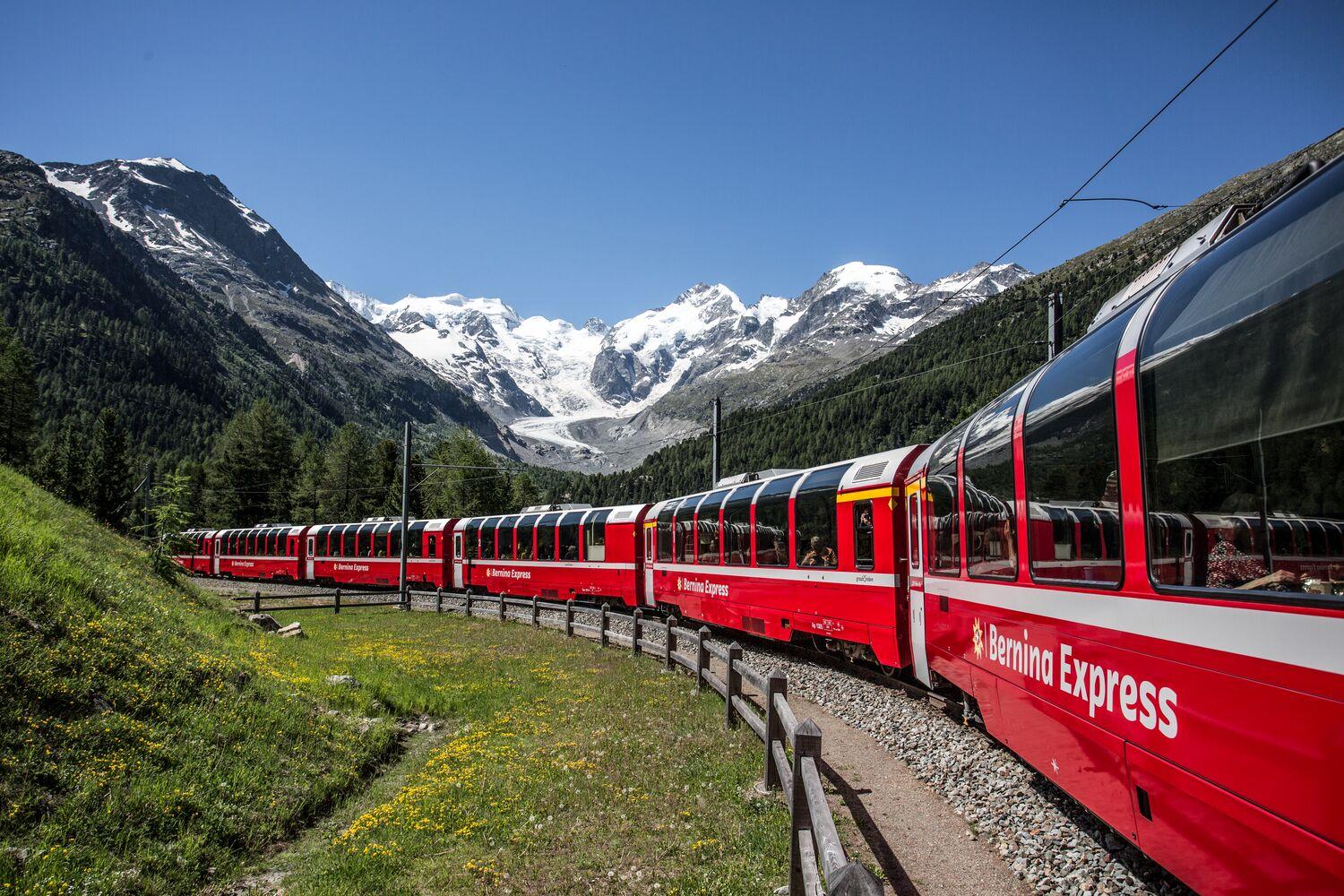
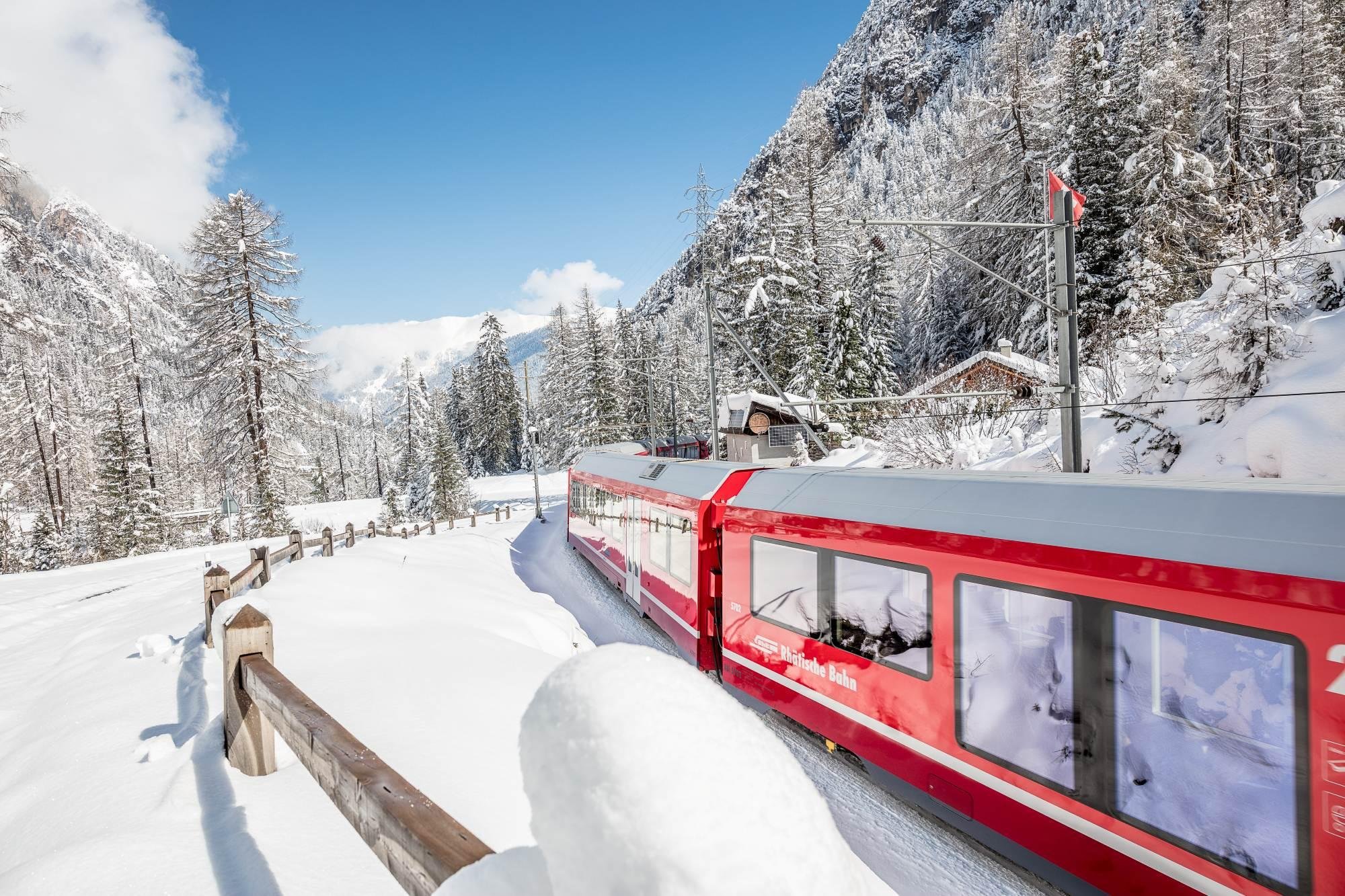
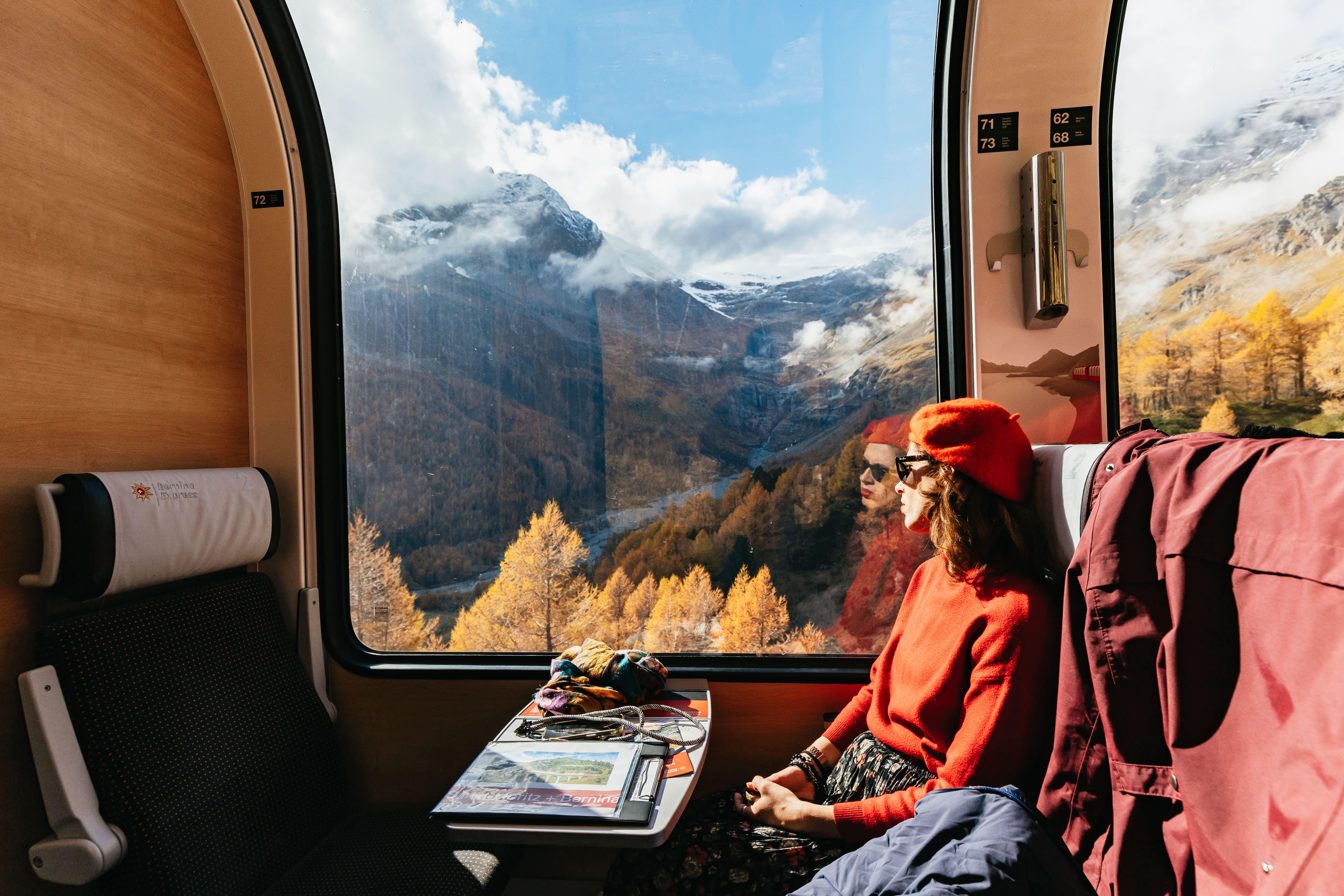
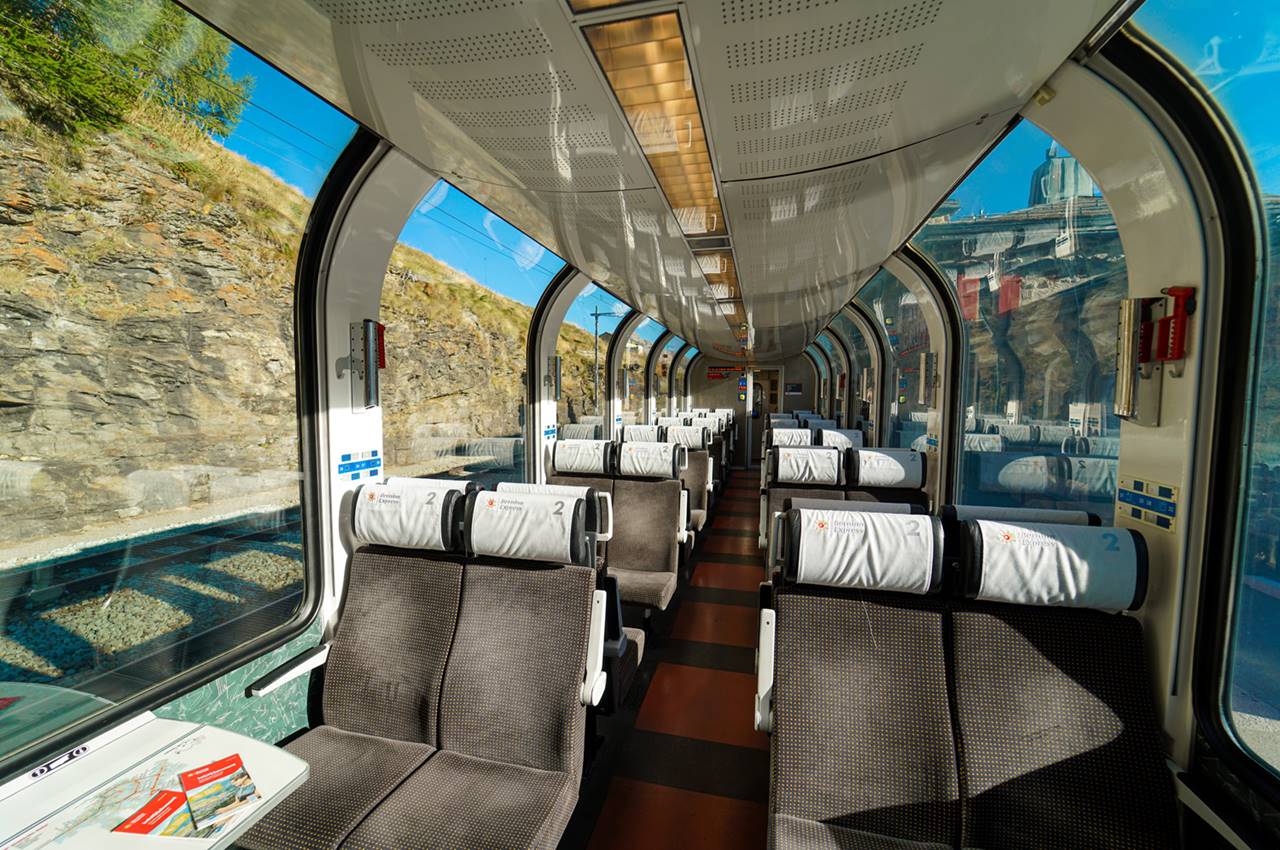
You board at Chur or Tirano, claiming a window seat in the panoramic carriage where curved glass extends overhead. The Bernina Express departs on time, ascending through larch forests as the Rhine Valley narrows.
At Bergün you enter the first spiral tunnel, circling 360 degrees inside the mountain while gaining 35 meters in elevation. Outside the window, the track you rode five minutes earlier now runs 50 meters below.
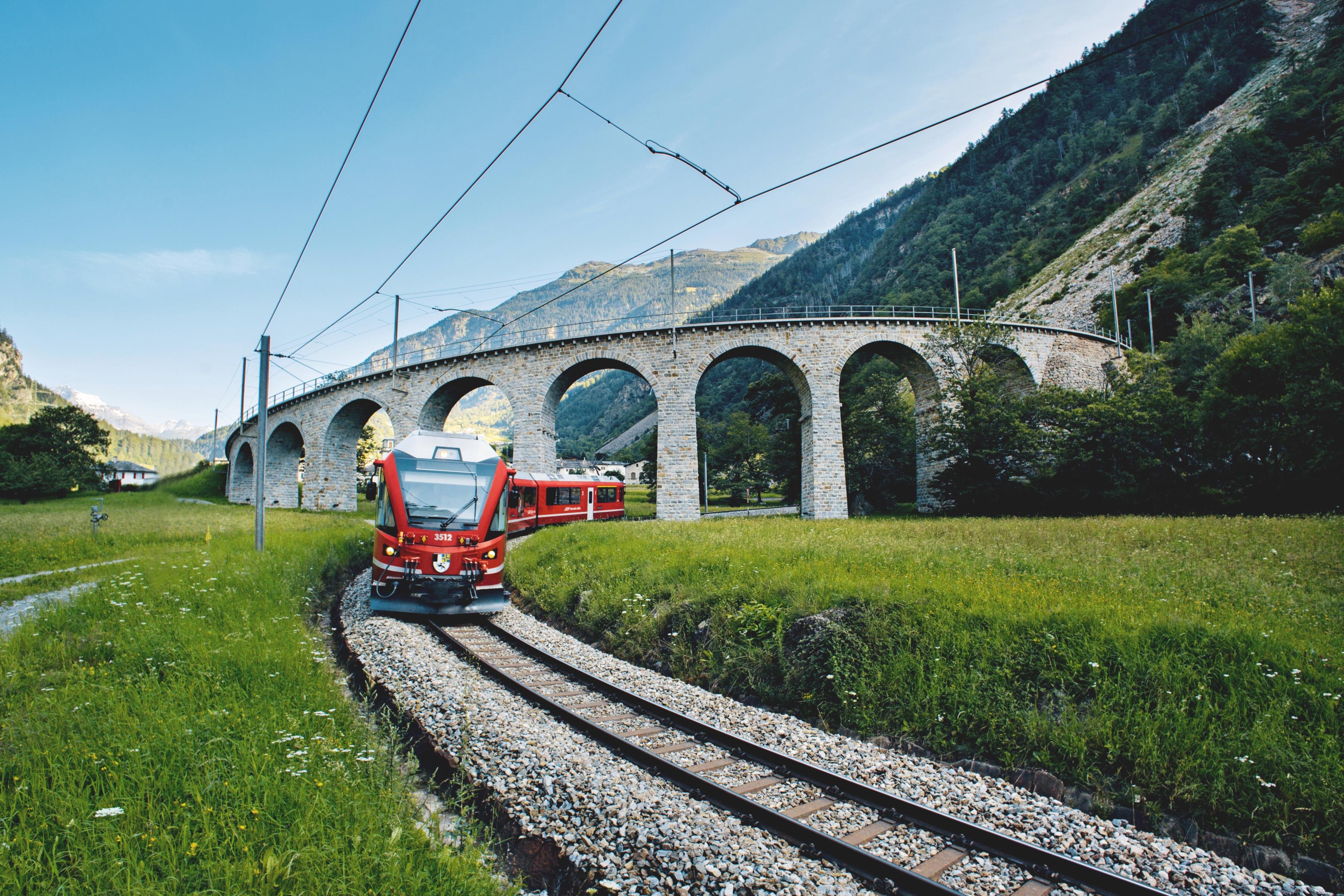
You pass Preda and climb toward Ospizio Bernina, where snowfields stretch unbroken to the horizon even in summer. The train slows at Alp Grüm, a request stop where passengers alight to photograph Palü Glacier's crevassed tongue. Descending into Val Poschiavo, you count 15 stone bridges in 20 minutes, each arch framing a different cascade or meadow. At Brusio the track loops through a nine-arch spiral viaduct visible from your seat as the carriage curves 110 degrees around itself.
You arrive in Tirano four hours after departure, stepping onto an Italian platform where the temperature reads 12 degrees warmer than at the summit. The return journey retraces the route in reverse, though afternoon light renders the glaciers amber rather than white.
All the details about your upcoming adventure in one place
Switzerland operates 5,200 kilometers of narrow-gauge mountain railway, more than any nation per capita, and the Rhaetian Railway alone crosses 196 bridges and 55 tunnels between Chur and Tirano.
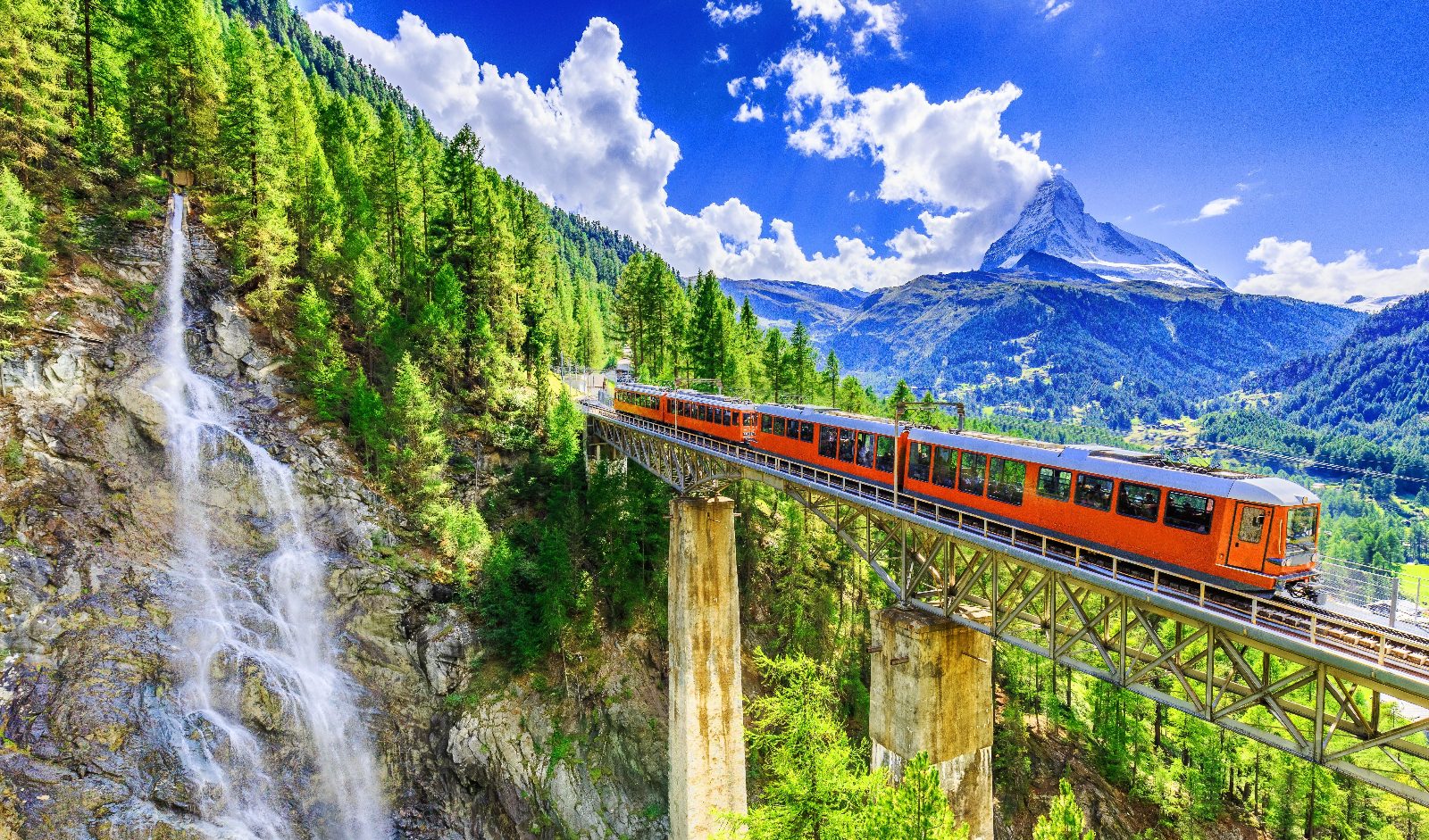
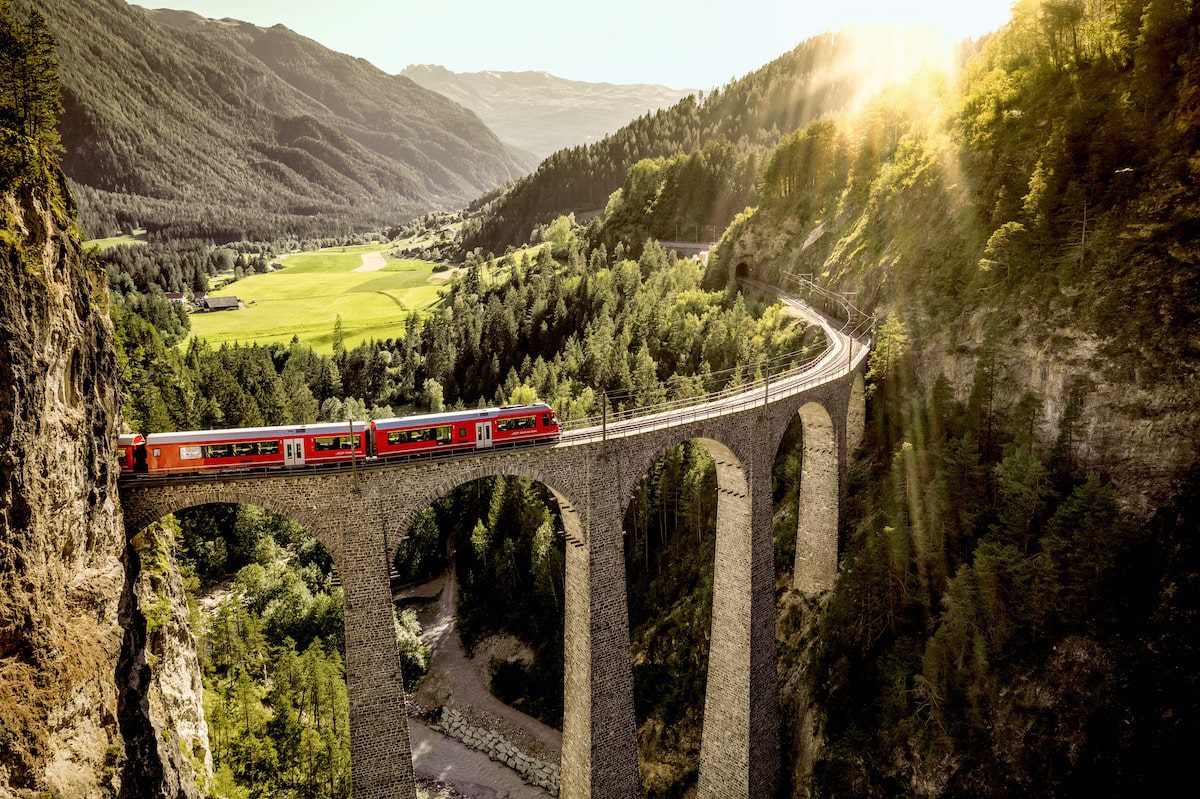
The Bernina Express climbs to 2,253 meters at Ospizio Bernina without a single cogwheel, relying on adhesion traction across a 7 percent gradient, while the Glacier Express traverses the 65-meter Landwasser Viaduct in six limestone arches built in 1902. These routes were engineered not for tourism but for cargo and postal delivery to isolated Alpine valleys in the 1880s, when Graubünden villages remained snowbound eight months a year.
Today a swiss train ride through alps connects four UNESCO World Heritage railway segments, including the Albula and Bernina lines that loop through 42 kilometers of avalanche galleries and spiral tunnels. Panoramic carriages with curved glass roofs entered service in 1993, replacing wood-paneled coaches that lacked heating above 1,800 meters. The Swiss Travel Pass grants unlimited access to the federal railway network and most private mountain lines, though seat reservations on named trains like the Bernina Express cost an additional 14 CHF in second class.
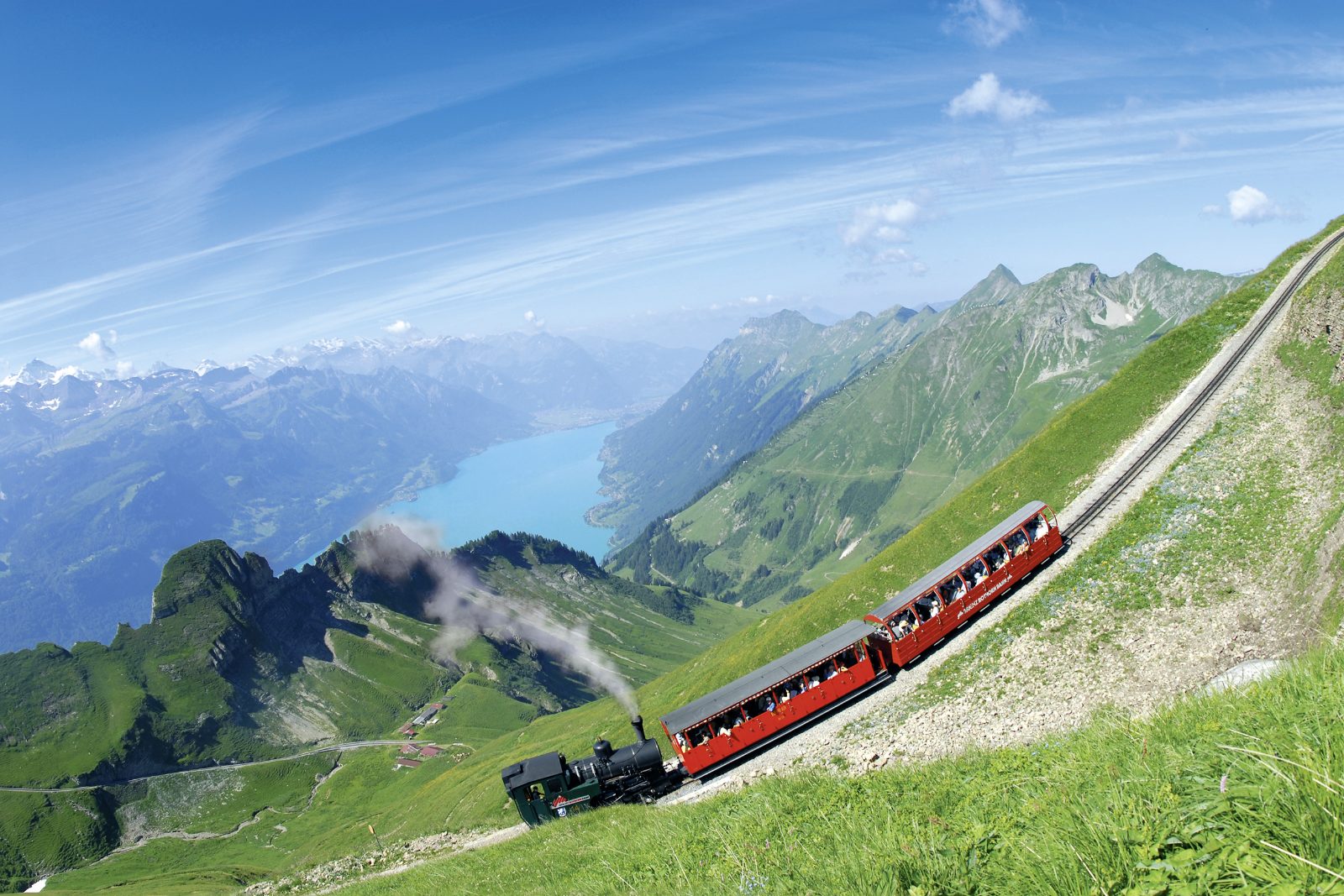
The Gotthard Panorama Express pairs a two-hour lake steamer crossing on Vierwaldstättersee with a southbound rail descent through the 57-kilometer Gotthard Base Tunnel, opened in 2016 as the world's longest railway bore. Mount Pilatus offers a cogwheel railway with a 48 percent maximum gradient, the steepest rack system globally, ascending 1,635 meters in 30 minutes. St. Moritz serves as the eastern terminus for both the Glacier Express and the Bernina line to Italy, where carriages descend 1,824 meters in 61 kilometers to reach Tirano's palm-lined piazzas at 429 meters elevation.
Alpine rail tickets are sold by SBB, the federal operator, and regional companies under a unified fare structure. Prices scale by distance and class, with half-fare cards reducing costs by 50 percent and supersaver tickets offering discounts up to 70 percent when booked three weeks ahead. Most routes run year-round, though the Schynige Platte and Brienzer Rothorn cogwheel lines close November through April due to snow depth exceeding operational limits.
The Bernina Express climbs to 2,253 meters without a single cogwheel, relying on adhesion traction across a 7 percent gradient.
Dress in layers, as temperatures vary significantly between valley stations and high-altitude mountain summits. A warm, windproof jacket is recommended even during summer months.
Large luggage can be stored in designated compartments on most trains. For a seamless swiss train ride through alps, avoid peak commute times with bulky gear.
Photography is permitted throughout the network. Capture the alpine landscape from panorama cars or open-air viewing platforms where available.
Children under 6 travel free; those aged 6–16 can often travel at a reduced rate or free with a Swiss Family Card. Family-friendly carriages are available on many long-distance routes.
SBB offers a dedicated Contact Center Handicap for passengers with reduced mobility. Request boarding assistance at least one hour in advance by calling 0800 007 102.
Passengers are welcome to bring their own snacks and drinks on board. Dining cars and refreshments are available on premium routes like the Glacier Express.
Opening hours
05:00–00:00 daily
Address
Swiss Federal Railways (SBB), Switzerland
Accessibility
SBB provides mobility assistance via 0800 007 102
Best arrival window
08:00–10:00
Luggage
Compartments available on all major trains
Operator
Swiss Travel System
Most tickets purchased via the official SBB tourist webshop allow for online cancellation. Check specific fare conditions at the time of booking for exact refund eligibility.
Recommended time
Full day
A proper swiss train ride through alps requires a full day to traverse high-altitude mountain passes and winding valleys via the Swiss Travel System. We advise departing during the 08:00–10:00 window to enjoy clear morning light and secure comfortable seating on iconic panoramic carriages. While swiss train ride through alps tours often feature reserved compartments, arriving early remains the best way to avoid peak midday crowds at major transit hubs. When booking your swiss train ride through alps tickets, plan for extended travel times if you intend to include mountain excursions or regional rail connections along the route.
Crowd levels through the day
Switzerland's mountain railways emerged from a 19th-century collision of engineering ambition and tourism demand. The Vitznau–Rigi line opened in 1871 as Europe's first rack railway, proving that trains could ascend gradients previously considered impossible. Engineer Niklaus Riggenbach's cog-wheel system solved the traction problem, and within two decades competing routes—the Pilatus, Jungfrau, and Gornergrat lines—raced to claim altitude records. The Gotthard Base Tunnel, completed in 1882, connected northern and southern Europe through the Alps, transforming Switzerland into a transit hub and accelerating demand for scenic mountain routes. The golden age arrived between 1890 and 1914, when the Bernina and Glacier Express routes took shape. The Rhaetian Railway's Albula Line, completed in 1904, featured 55 tunnels and 196 bridges over 67 kilometers, a feat of civil engineering that avoided rack systems entirely through spiral tunnels and looping viaducts. The Bernina Pass section, finished in 1910, remains the highest adhesion railway crossing in Europe. These lines were not merely transport—they were designed as experiences, with panoramic coaches and deliberate slow speeds to showcase the landscape. World War I halted expansion, but the interwar period saw electrification standardize operations. The Glacier Express brand launched in 1930, marketing the Zermatt–St. Moritz journey as the world's slowest express train. Post-war reconstruction unified operations under the Swiss Federal Railways (SBB), though private narrow-gauge operators retained autonomy. The 1970s introduced the Swiss Travel Pass, bundling swiss train ride through alps tours into a single tourist product. The Gotthard Base Tunnel's 2016 successor—the world's longest and deepest rail tunnel—shifted freight underground, preserving historic mountain routes for tourism. Today's network blends 19th-century engineering with modern climate control and reservation systems, carrying over 40 million passengers annually on routes that once required royal patronage.
Vitznau–Rigi rack railway opens as Europe's first mountain cog train.
Gotthard Tunnel completes the first direct rail link through the central Alps.
Rhaetian Railway's Albula Line debuts 55 tunnels and 196 bridges in 67 kilometers.
Bernina Pass section finishes, creating Europe's highest adhesion railway crossing.
Glacier Express brand launches, marketing the Zermatt–St. Moritz route as a scenic experience.
Swiss Travel Pass consolidates alpine rail networks into a unified tourist product.
Gotthard Base Tunnel opens as the world's longest rail tunnel, preserving historic mountain routes for tourism.
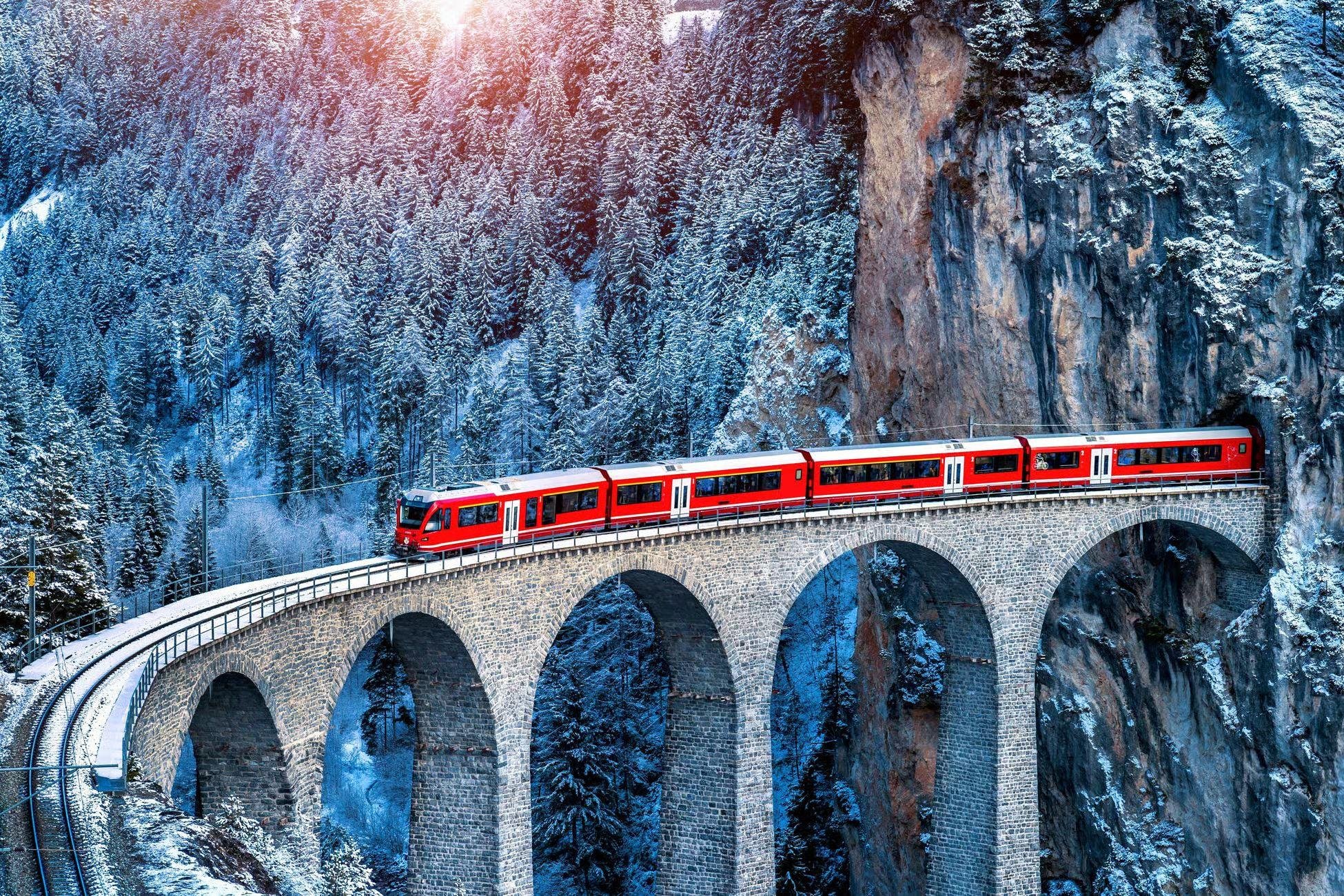
The most iconic perspective of the curved viaduct, offering a perfect angle to capture the red train entering the tunnel.
Traveling with children on a swiss train ride through alps offers a seamless way to traverse high-altitude landscapes with comfort. The Swiss Travel System ensures your family remains relaxed while navigating these iconic mountain routes.
Most panoramic coaches and regional trains accommodate folded strollers in luggage areas, while modern low-floor carriages provide easy boarding for families. Always check swiss train ride through alps tours details to confirm specific equipment storage on narrow-gauge tracks.
Look for dedicated family coaches on longer intercity lines, which often include play areas or specialized seating configurations for parents. Baby-change tables are standard in many accessible restrooms found on SBB trains.
Break up your swiss train ride through alps tickets usage by opting for shorter, multi-leg journeys that allow children to explore station platforms. Keep transit days manageable by planning segments no longer than two hours at a time.
Bring snacks and drinks to supplement offerings, as many panoramic routes provide buffet or trolley services suited for young travelers. Using your swiss train ride through alps tour as a primary transit method allows you to enjoy meals while watching the glacier views pass by.
This travel method suits all ages, though toddlers benefit most from the spacious aisles where they can move around during transit. School-aged children can engage with the geography using route maps provided at SBB stations.
Dining options during a swiss train ride through alps vary from elegant onboard restaurant cars to casual station bistros. Travelers booking swiss train ride through alps tickets often prioritize these convenient venues located at major transit hubs.
Located directly in the main station, this spot offers quick access to local pastries and warm beverages before your swiss train ride through alps tour begins. It is ideal for a fast morning meal while waiting for departures.
Everything you need to know for your journey
Services on the Swiss Travel System network operate daily from 05:00–00:00.
Tickets for your swiss train ride through alps can be booked directly via the official SBB website.
Yes, SBB works to ensure accessibility and provides a contact center for mobility assistance.
Pack layers, a waterproof jacket, and comfortable shoes for your swiss train ride through alps tour.
Yes, these excursions are perfect for families, with many discounts available for children.
Yes, you are encouraged to bring your own snacks for your swiss train ride through alps journey.
For the clearest views and fewer crowds, arrive between 08:00–10:00.
Prohibited items include explosives, flammable liquids, and large unsecured items.
Contact the SBB Contact Center Handicap at 0800 007 102 for assistance during your swiss train ride through alps.
Join thousands of happy travelers who have discovered this incredible experience
Book Your Experience Now